
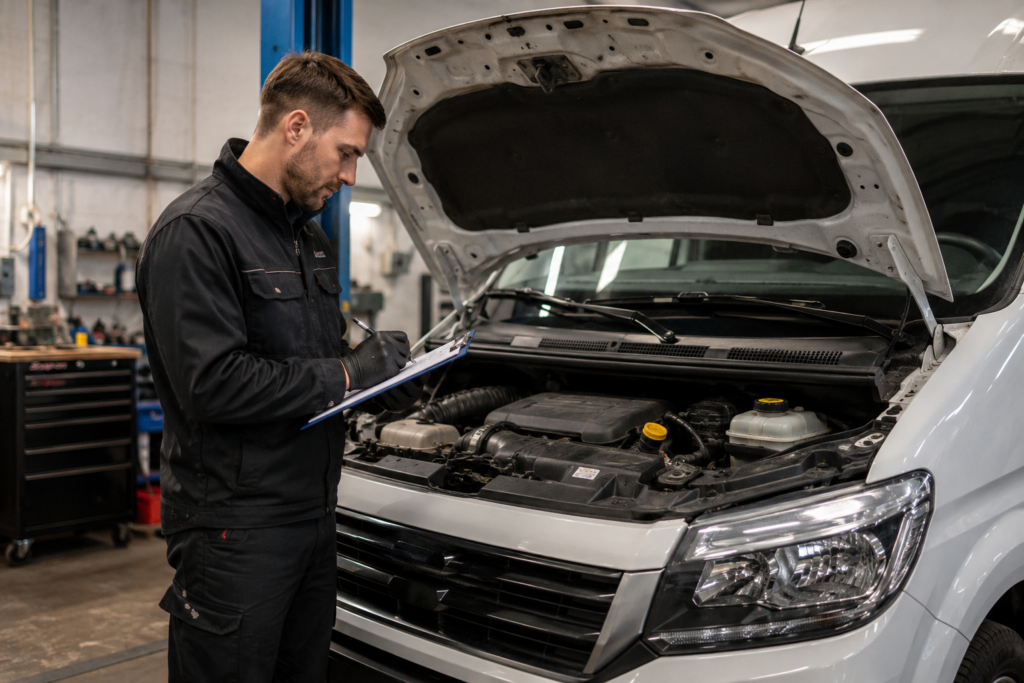
If your business depends on a van, keeping it on the road is not optional. Whether you are a plumber racing between call-outs, a florist delivering arrangements, or a local courier with a packed schedule, one breakdown can throw your entire day into chaos.
The problem is that many van issues do not appear overnight. They build slowly. A worn tyre here, low oil there, brakes that feel slightly different every week. Ignore them long enough and suddenly your van is parked up with a repair bill large enough to ruin your mood for the month.
The good news is that regular servicing and a few simple checks can prevent most of these problems before they become expensive headaches.
Here is a practical van service checklist to help keep your business moving.
Why Regular Van Servicing Matters
A van is more than just transport. For many businesses, it is effectively a mobile office, workshop, warehouse, and delivery system rolled into one.
When your van is off the road, work stops. Appointments get cancelled, deliveries run late, and customers start asking awkward questions.
Regular servicing helps you:
- Reduce the risk of breakdowns
- Spot problems early
- Improve fuel economy
- Extend vehicle lifespan
- Maintain safety standards
- Improve MOT pass rates
- Avoid costly emergency repairs
It also gives you peace of mind. There is a big difference between driving confidently to a job and wondering whether that strange noise will turn into a recovery truck situation.
Daily Van Checks Every Driver Should Do
You do not need to be a mechanic to carry out a basic daily inspection. Most checks take less than five minutes and can save you from major problems later.
Tyres
Check tyre pressure and tread depth regularly. Uneven wear can indicate alignment or suspension issues, while underinflated tyres increase fuel consumption and reduce handling.
Lights and Indicators
Walk around the van and make sure all lights are working properly. It is a simple check that can prevent fines and improve safety.
Oil Level
Low engine oil can cause serious engine damage surprisingly quickly. Keep an eye on levels and top up when needed.
Coolant
Coolant helps regulate engine temperature. Running low can lead to overheating, especially during long journeys or heavy traffic.
Windscreen Washer Fluid
It sounds obvious until you are stuck behind a muddy lorry in heavy rain with an empty washer bottle.
Dashboard Warning Lights
Never ignore warning lights. Your van is basically telling you it needs attention. Hoping the light will disappear is not a maintenance strategy.
Brakes
If the brakes feel different, softer, noisier, or less responsive, get them checked immediately.
Mirrors and Visibility
Clean mirrors and windows improve safety and reduce blind spots.
Weekly and Monthly Maintenance Checks
Daily inspections are useful, but some areas need slightly more attention over time.
Battery Condition
Look for corrosion around battery terminals and pay attention to slow engine starts. A weak battery often gives warning signs before failure.
Wiper Blades
Damaged blades reduce visibility and can smear water across the windscreen instead of clearing it.
Fluid Leaks
Check underneath the van for signs of oil, coolant, or other fluid leaks.
Suspension and Steering
If the van feels unstable, pulls to one side, or handles differently than usual, it is worth booking an inspection.
AdBlue Levels
Many modern diesel vans rely on AdBlue systems to control emissions. Running low can eventually stop the vehicle from starting.
Air Filters
Dirty air filters reduce engine efficiency and fuel economy.
Warning Signs You Should Never Ignore
Most serious van problems start as minor issues. The earlier they are caught, the cheaper they usually are to fix.
Book your van in if you notice:
- Knocking or grinding noises
- Smoke from the exhaust
- Reduced fuel economy
- Difficulty starting
- Burning smells
- Vibrations through the steering wheel
- Poor braking performance
- Warning lights staying on
- Excessive exhaust noise
Ignoring these signs because the van still drives is a bit like ignoring toothache because you can still eat crisps. It rarely ends well.
How Often Should You Service a Van?
Service intervals vary depending on the manufacturer and how the van is used.
For many commercial vans, servicing is recommended every 12 months or roughly every 12,000 miles. However, business vehicles often work harder than private cars.
You may need more frequent servicing if your van regularly deals with:
- Heavy loads
- Stop-start traffic
- Long motorway mileage
- Towing
- Daily commercial use
A courier driving hundreds of miles every week puts very different strain on a van compared to someone using it occasionally for local jobs.
If you are unsure, a trusted garage can recommend the right schedule based on your usage.
What Happens During a Professional Van Service?
Professional servicing involves far more than simply changing the oil.
A thorough van service typically includes:
- Oil and filter replacement
- Brake inspection
- Tyre condition checks
- Fluid top-ups
- Steering inspection
- Suspension checks
- Battery testing
- Exhaust inspection
- Diagnostic scans
- Air and cabin filter checks
Modern vans contain increasingly complex electronics, so diagnostic equipment can often identify issues long before drivers notice symptoms.
That early detection can save businesses significant money over time.
The Cost of Skipping Servicing
It is understandable why some businesses delay servicing. When work is busy, taking a van off the road for maintenance can feel inconvenient.
Unfortunately, skipping servicing usually costs more in the long run.
Minor maintenance issues can quickly become:
- Engine repairs
- Brake replacements
- Clutch failures
- Turbocharger problems
- Breakdown recovery costs
- Failed MOTs
- Lost business income
Preventative maintenance is almost always cheaper than emergency repairs.
There is also the customer side to consider. Clients may forgive the occasional delay, but repeated cancellations due to vehicle issues can damage your reputation surprisingly quickly.
Fleet Vans Need Even More Attention
If your business operates multiple vans, preventative maintenance becomes even more important.
Fleet servicing helps businesses:
- Reduce downtime
- Schedule repairs efficiently
- Keep drivers safe
- Maintain service records
- Improve reliability
- Control long-term costs
A structured servicing plan also makes budgeting easier because unexpected repair bills become less common.
For many businesses, regular fleet maintenance is not just about vehicle care. It is part of protecting productivity and customer service standards.
MOTs and Servicing Are Not the Same Thing
Many drivers assume an MOT means the van is fully healthy. It does not.
An MOT checks whether a vehicle meets minimum legal safety and environmental standards at the time of the test. Servicing focuses on maintaining the vehicle’s overall condition and preventing future problems.
Think of an MOT as passing an exam. Servicing is the revision that helps you avoid failing in the first place.
Regular maintenance also improves the likelihood of passing your MOT without nasty surprises.
Keep Your Business Moving
Your van works hard for your business every day. Looking after it properly is one of the simplest ways to avoid stress, reduce costs, and keep work running smoothly.
A few minutes spent checking tyres, fluids, lights, and warning signs can prevent hours of downtime later. Combined with regular professional servicing, those simple habits help keep your van reliable, efficient, and safe.
Because when your van stops, your business often does too.