
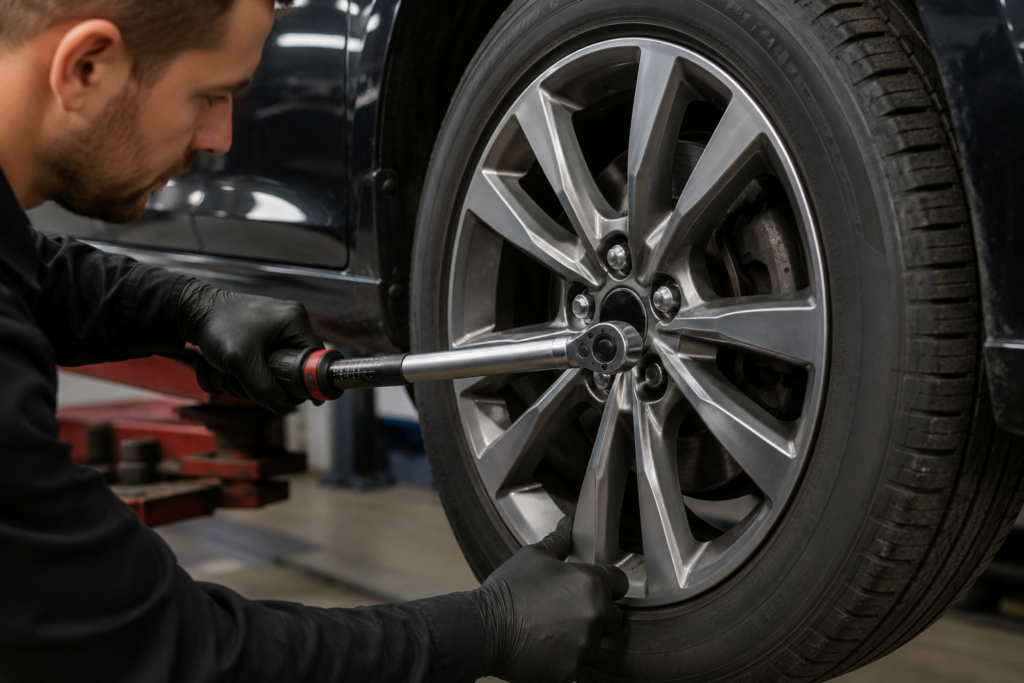
Most drivers never think about wheel nut torque until something feels wrong.
Maybe the steering wheel suddenly starts vibrating after a tyre change. Maybe there is a strange knocking noise coming from one corner of the car. Or perhaps you discover you cannot remove a wheel during a roadside puncture because the wheel nuts have been tightened with the force of a rocket launch.
It might seem like a small detail, but correct wheel nut torque plays a huge role in vehicle safety. Wheel nuts that are too loose or too tight can both create serious problems, affecting everything from steering and braking to the security of the wheel itself.
The good news is that these problems are avoidable with proper fitting procedures and a little awareness.
What Is Wheel Nut Torque?
Wheel nut torque refers to the amount of force used to tighten the wheel nuts onto your vehicle’s wheel hub.
Manufacturers specify an exact torque setting for every vehicle. This is usually measured in Newton metres, often shortened to Nm. Most passenger cars commonly fall somewhere around 110 to 120 Nm, but the correct figure always depends on the specific make and model.
The purpose of torque is simple. It ensures the wheel is clamped securely to the vehicle without causing damage.
Too loose and the wheel can move.
Too tight and components can become damaged or stressed.
Getting the balance right is essential for safe driving.
Why Correct Wheel Nut Torque Matters
Your wheels deal with enormous forces every time you drive. Braking, cornering, potholes, speed bumps, and uneven road surfaces all place stress on the wheel mounting points.
If the wheel nuts are not tightened correctly, those forces can gradually create movement between the wheel and the hub.
That movement is where problems begin.
Loose Wheel Nuts Can Be Dangerous
Loose wheel nuts are far more serious than many people realise.
At first, the symptoms can be subtle. You may notice slight vibrations through the steering wheel or hear a faint clicking noise when driving at low speeds. As the wheel becomes looser, the symptoms often become more obvious.
Common warning signs include:
- Steering vibration
- Knocking or clicking noises
- Uneven braking feel
- Wheel wobble
- Metallic sounds from the wheel area
- A vehicle that suddenly feels unstable
If ignored, loose wheel nuts can damage the wheel studs and mounting holes. In extreme cases, the wheel can detach from the vehicle completely.
That is not just inconvenient. It is extremely dangerous.
A wheel separating from a moving vehicle creates a serious risk for both the driver and other road users.
Overtightened Wheel Nuts Cause Problems Too
Most people assume tighter must be safer.
Not true.
Overtightened wheel nuts can create a completely different set of issues.
Excessive tightening force can stretch wheel studs, damage threads, warp brake discs, and make future wheel removal incredibly difficult. That last point tends to become very important during a puncture on a rainy roadside.
Many overtightening problems come from improper use of impact guns. While impact tools are useful in professional workshops, they should not replace a final torque wrench check.
There is a big difference between tightening something properly and simply applying maximum force.
Bigger impact gun energy does not equal better wheel security.
Common Causes of Incorrect Wheel Nut Torque
Incorrect wheel nut torque is usually caused by rushed or careless fitting procedures.
Some of the most common causes include:
Overuse of Impact Guns
Impact guns can tighten wheel nuts extremely quickly, but without proper calibration and final checking, they can easily overtighten them.
Skipping the Torque Wrench
A torque wrench ensures the exact manufacturer specification is applied. Guesswork is never reliable.
Incorrect Tightening Sequence
Wheel nuts should normally be tightened in a criss-cross or star pattern. This helps the wheel sit evenly against the hub.
Tightening them in the wrong order can create uneven pressure.
Dirt or Corrosion
Rust, dirt, or debris between the wheel and hub can affect how the wheel sits and alter torque readings.
DIY Mistakes
Many drivers attempt wheel fitting at home without understanding proper torque procedures. Unfortunately, “that feels tight enough” is not an approved engineering method.
Why Retorquing Matters After Tyre Changes
After new tyres are fitted or wheels are removed, many garages recommend retorquing the wheel nuts after a short period of driving.
This usually means checking the torque again after around 30 to 100 miles.
Why?
Because wheels can settle slightly once the vehicle is back on the road. Heat cycles, vibration, and normal driving forces can affect the clamping force holding the wheel in place.
A retorque check confirms everything remains correctly tightened after the initial fitting.
Professional garages often see this as part of good workshop practice rather than an optional extra.
Signs Your Wheel Nuts May Not Be Correctly Tightened
If your wheels have recently been removed for tyre fitting, brake work, or repairs, it is worth paying attention to how the car feels afterwards.
Some warning signs should never be ignored.
These include:
- Steering wheel vibration
- Knocking or clicking noises
- Wobbling sensations
- Difficulty loosening wheel nuts
- Uneven braking feel
- Metallic noises while driving
- A feeling that the car is not handling normally
If something feels wrong after tyre or wheel work, do not simply hope it goes away.
It is always safer to have the vehicle checked properly.
Can You Check Wheel Nut Torque Yourself?
Yes, you can, provided you use the correct equipment.
The proper tool for the job is a torque wrench. Unlike a standard wheel brace, a torque wrench allows you to tighten wheel nuts to a precise specification.
If checking wheel nut torque yourself:
- Always follow manufacturer settings
- Tighten wheel nuts in the correct sequence
- Never rely purely on feel
- Avoid excessive force
- Check the torque wrench is properly calibrated
One thing definitely worth avoiding is standing on the wheel brace like you are competing in a strongman event.
If you are unsure, it is always better to let a professional garage carry out the check.
Why Professional Wheel Fitting Matters
Wheel fitting might appear simple, but proper workshop procedures make a big difference to safety.
Professional technicians understand:
- Correct torque settings
- Proper tightening patterns
- The importance of clean mounting surfaces
- When wheel studs or nuts need replacing
- How to spot signs of damage or wear
Attention to detail matters.
A correctly fitted wheel should feel completely normal and secure from the moment you leave the garage.
How Windmill Garage Helps Keep Drivers Safe
At Windmill Garage, vehicle safety is never treated as an afterthought.
Proper wheel fitting procedures, accurate torque settings, and careful inspections all form part of ensuring vehicles leave the workshop safe and road-ready.
Whether your vehicle is in for servicing, MOT work, tyre replacement, brake repairs, or diagnostics, attention to detail matters throughout the process.
If your wheels have recently been removed and something does not feel quite right afterwards, it is always worth getting things checked properly before a small issue becomes a bigger one.
Final Thoughts
Wheel nut torque may not sound exciting, but it is one of those small details that has a huge impact on vehicle safety.
Loose wheel nuts can lead to vibration, instability, and serious wheel damage. Overtightened wheel nuts can create equally frustrating and dangerous problems.
Correct torque protects your wheels, brakes, steering, and overall driving safety.
So the next time your wheels are removed for tyres, brakes, or repairs, remember that proper tightening is not just workshop box-ticking.
It is an essential part of keeping you safe on the road.