
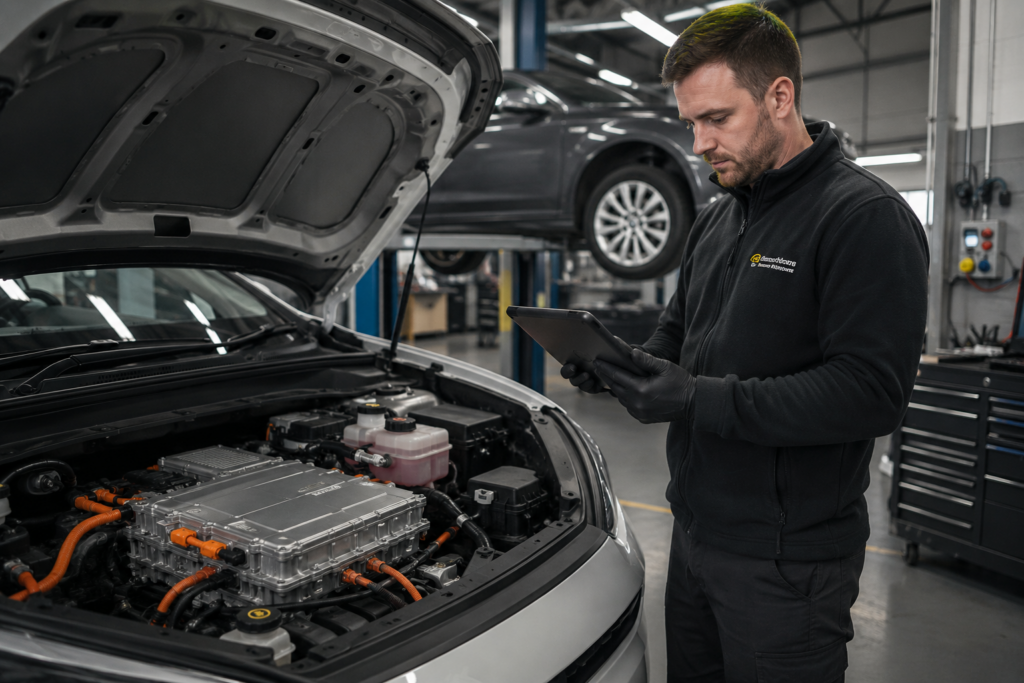
Electric cars are becoming a far more common sight on UK roads. From family SUVs to company fleets, more drivers are making the switch to electric vehicles, often attracted by lower running costs and reduced emissions.
Despite the growing popularity of EVs, there is still plenty of confusion surrounding servicing and maintenance. Some people believe electric cars never need servicing at all. Others assume repairs are eye-wateringly expensive or that batteries will suddenly fail after a few years.
The reality sits somewhere in the middle. Electric cars are generally simpler to maintain than petrol or diesel vehicles, but they are certainly not maintenance-free. Like any vehicle, they still need proper care to stay safe, reliable, and efficient.
Here are some of the biggest myths surrounding electric car servicing and the truth behind them.
Myth 1: Electric Cars Do Not Need Servicing
This is probably the most common EV myth of all.
Yes, electric vehicles have fewer moving parts than traditional petrol or diesel cars. There is no engine oil to replace, no spark plugs, no clutch, and no exhaust system rattling underneath the car waiting to ruin your day before payday.
But electric cars still contain plenty of components that wear over time.
Tyres, suspension, steering, brakes, filters, and cooling systems all require regular inspection and maintenance. Software updates and battery health checks are also important parts of modern EV servicing.
Ignoring routine servicing can lead to small issues becoming larger and more expensive problems later on. In some cases, missing scheduled servicing may even affect manufacturer warranties.
Think of it this way. Your electric car may not need oil changes, but potholes, speed bumps, and kerbs still exist.
Myth 2: Electric Car Servicing Is More Expensive
Many drivers assume EV servicing must cost more because the technology sounds more advanced.
In reality, routine servicing for electric cars is often cheaper than servicing a petrol or diesel vehicle.
Traditional engines involve hundreds of moving parts that require regular maintenance. Oil changes, timing belts, fuel filters, spark plugs, and exhaust repairs can all add up over time.
Electric vehicles remove many of these items entirely.
That does not mean EVs are immune to repair costs. Specialist components and battery-related repairs can be expensive in some situations. However, for everyday servicing and maintenance, many EV owners actually spend less overall.
There is also less general wear in certain areas. Regenerative braking systems help reduce brake usage, which can extend the lifespan of brake components compared to conventional cars.
For many drivers, the fear of massive servicing bills simply does not match the real-world experience of EV ownership.
Myth 3: EV Batteries Need Replacing Every Few Years
Battery anxiety remains one of the biggest concerns for people considering electric vehicles.
Some drivers still imagine EV batteries behaving like old mobile phone batteries that suddenly refuse to hold charge after a couple of years.
Modern electric vehicle batteries are designed very differently.
Most manufacturers now provide battery warranties of around eight years, and many batteries continue performing well far beyond that point. In most cases, battery degradation happens gradually over time rather than through sudden failure.
Real-world data from high-mileage EVs has shown that many retain a large percentage of their original battery capacity even after years of driving.
Of course, battery health still matters. Proper servicing and diagnostic checks help identify any issues early and ensure cooling systems and charging systems continue working correctly.
For the average driver, battery replacement is far less common than social media horror stories might suggest.
Myth 4: Any Garage Can Service an Electric Car
While EVs are simpler in some areas, they also introduce specialist systems that require proper training and safety procedures.
Electric vehicles contain high-voltage components that can be dangerous if handled incorrectly. Technicians working on EVs need specialist knowledge, qualifications, and equipment to carry out servicing safely.
That does not mean you have to visit a main dealer every time your car needs attention. Many independent garages now invest heavily in EV training and diagnostics so they can safely service modern electric vehicles.
The important thing is choosing a garage with the correct expertise.
A qualified garage will understand how to safely isolate high-voltage systems, carry out battery diagnostics, inspect charging components, and perform manufacturer-recommended servicing procedures.
As electric cars become more common, garages are evolving alongside them. The best workshops are preparing for the future rather than pretending electric vehicles are just a passing trend.
Myth 5: Regenerative Braking Means Brakes Never Wear Out
Regenerative braking is one of the clever features that makes electric cars feel different to drive.
When you lift off the accelerator, the vehicle slows down while recovering energy back into the battery. This reduces reliance on traditional brake pads and discs.
Some drivers take this to mean EV brakes basically last forever.
Sadly, physics still has other ideas.
Although brake wear is often reduced in electric vehicles, braking components still require maintenance and inspection. In fact, because EVs sometimes use conventional brakes less frequently, components can occasionally suffer from corrosion or sticking if left unchecked.
Regular servicing ensures brakes remain clean, safe, and functioning properly.
Tyres are another area often overlooked. Electric vehicles tend to be heavier than petrol cars due to battery weight, and instant torque can increase tyre wear if drivers enjoy enthusiastic acceleration a little too much.
Your electric car may feel futuristic, but its tyres are still very much attached to British roads.
Myth 6: Electric Cars Are Maintenance-Free
Electric cars absolutely reduce some aspects of vehicle maintenance, but maintenance-free motoring is still fantasy territory.
EVs still rely on suspension systems, air conditioning, tyres, coolant systems, cabin filters, steering components, and electronic systems that all require periodic inspection and servicing.
Software also plays a much larger role in electric vehicles. Diagnostic checks and updates can improve efficiency, performance, and even battery management over time.
Regular servicing helps identify problems before they become serious, improves long-term reliability, and gives drivers peace of mind.
It is less about eliminating maintenance completely and more about changing the type of maintenance required.
Why Proper EV Servicing Still Matters
Electric vehicles represent a major shift in motoring, but the fundamentals of vehicle care remain the same.
Routine servicing helps:
- Keep vehicles safe and reliable
- Maintain battery efficiency
- Reduce long-term repair costs
- Identify faults early
- Protect warranties
- Extend vehicle lifespan
As more drivers switch to electric vehicles, understanding the realities of EV maintenance becomes increasingly important.
The good news is that many of the scary stories surrounding electric cars are either exaggerated or outdated. Modern EVs are generally reliable, practical, and often cheaper to maintain than people expect.
They still need professional servicing, but not because they are fragile or problematic. They simply require the right knowledge and proper care, just like any modern vehicle.
Electric cars may represent the future of motoring, but even the future still needs its tyres checked occasionally.