
You have just bought a newer car, and before you have even had the chance to enjoy that “new car smell”, somebody says it:
“You’ll need to take it back to the dealer for servicing or your warranty will be void.”
It is one of the most common myths in the motor trade. It has been repeated for years, often with enough confidence to make drivers panic and hand over dealership-level money without questioning it.
The truth is far less dramatic.
In most cases, you do not need to use a main dealer to keep your manufacturer warranty valid. Independent garages can legally service your vehicle, provided the work is carried out correctly and follows manufacturer guidelines.
That means you can often save money, get more personal service, and still protect your warranty at the same time.
Not bad for a myth that refuses to die.
Why This Myth Still Exists
For years, many motorists believed dealerships had exclusive rights to service newer vehicles. Some still think a dealer stamp is the magical ingredient that keeps a warranty alive.
In reality, manufacturers are not allowed to force you into dealership servicing simply to maintain your warranty.
So why does the myth continue?
Partly because modern cars are more technical than ever. Drivers hear terms like “manufacturer software”, “specialist diagnostics”, and “approved servicing”, then assume only the dealership can handle the job.
There is also the fear factor. Nobody wants to risk losing warranty protection on a car that cost thousands of pounds.
Understandably, many people play it safe.
The problem is that “playing it safe” can sometimes mean paying considerably more than necessary.
What the Law Actually Says
Under UK competition laws and Block Exemption regulations, motorists are free to choose where their vehicle is serviced.
That means independent garages can carry out servicing and maintenance work on vehicles that are still under manufacturer warranty.
There are conditions, of course. It is not a free-for-all where someone armed with a socket set and optimism can service your car on the driveway.
To protect your warranty, servicing must:
- Follow the manufacturer’s service schedule
- Use the correct oils and fluids
- Use OE quality or approved equivalent parts
- Be properly documented
If those standards are met, your warranty remains protected.
The key point is this:
It is not about where the car is serviced. It is about whether the car is serviced properly.
That distinction saves many drivers a significant amount of money every year.
What Can Actually Void Your Warranty?
Now for the important bit.
While independent servicing does not automatically void your warranty, there are things that can cause problems.
Skipping services is one of the biggest risks. If your manufacturer specifies servicing every 12 months or 10,000 miles and you ignore it, that could affect warranty claims later.
Using incorrect parts or fluids can also create issues. Modern engines are extremely precise, and the wrong oil specification alone can cause expensive damage.
Poor workmanship is another factor. If repairs or servicing are carried out incorrectly and this leads to a failure, manufacturers may reject related warranty claims.
Then there is paperwork.
Yes, paperwork. Everybody’s favourite.
If you cannot prove servicing has been completed properly, you may struggle if a warranty dispute arises later. Good garages keep accurate records and provide clear invoices detailing the work completed.
In short, the real danger is not independent servicing.
The real danger is bad servicing.
Dealer vs Independent Garage: What Is the Real Difference?
This is where things get interesting.
Dealerships certainly have their strengths. They specialise in specific brands, have direct manufacturer links, and often have access to the latest technical updates.
But independent garages have changed massively over the years.
Modern independent garages invest heavily in diagnostics, training, and technology. Many technicians working at independents originally trained within dealership networks anyway.
The difference often comes down to experience and approach.
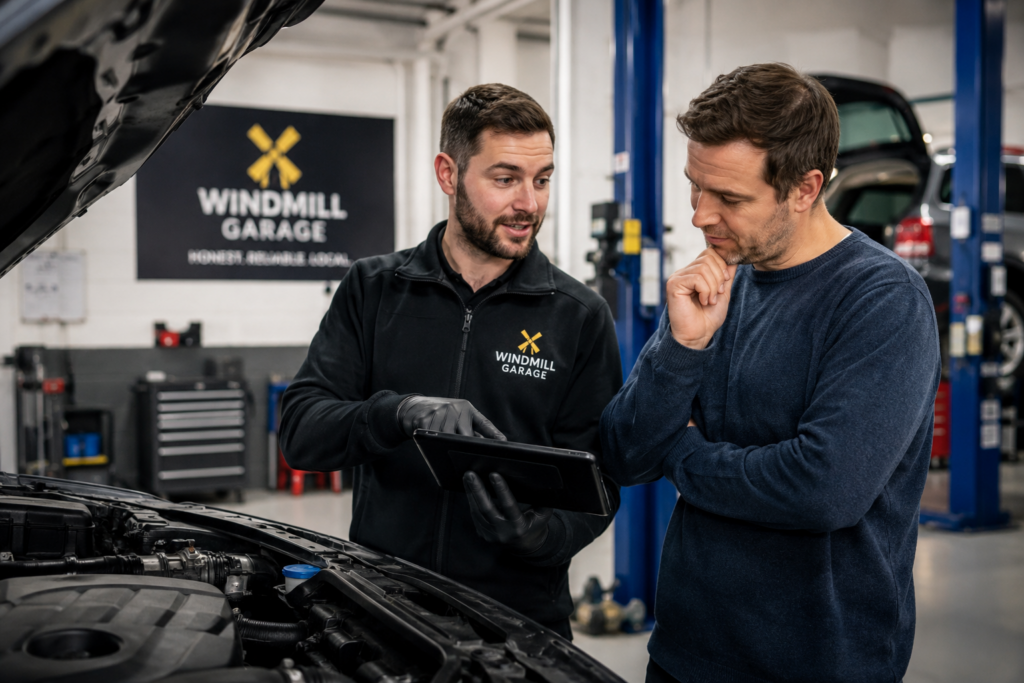
Dealerships can feel corporate and process-driven. Independent garages are usually more personal. You are more likely to speak directly with the technician working on your vehicle rather than somebody translating mechanical information into customer-service language.
Sometimes badly.
Independent garages also tend to offer better value. Lower overheads often mean lower labour costs, without sacrificing quality.
That matters when routine servicing costs continue climbing faster than most people would like.
Then there is flexibility.
Many independent garages are happy to explain issues clearly, prioritise urgent repairs, and help customers understand what actually needs doing versus what can reasonably wait.
That level of honesty is refreshing in an industry where many drivers still feel nervous walking into a garage.
Modern Cars Still Need Specialist Care
One reason some motorists worry about independent garages is because modern vehicles are packed with technology.
Touchscreens, sensors, driver-assistance systems, hybrid components, online service records, and software updates can make cars feel more like laptops with wheels.
But reputable independent garages are fully aware of this.
Many now use advanced diagnostic equipment capable of accessing manufacturer-level systems. They also have access to servicing schedules and technical data required to maintain vehicles correctly.
In many cases, independent garages can even update digital service records.
So while modern vehicles are more complicated, that does not automatically mean dealership-only servicing.
It simply means choosing the right garage matters more than ever.
The Importance of Choosing a Trusted Garage
Not all garages are equal.
That applies to dealerships and independents alike.
When choosing a garage for warranty-safe servicing, look for:
- Experienced technicians
- Clear communication
- Proper service documentation
- Quality parts
- Good customer reviews
- Modern diagnostic capability
- Transparency on pricing
A good garage should happily explain what is included in the service and why certain work is recommended.
If somebody starts speaking entirely in mysterious mechanical riddles while avoiding eye contact, alarm bells should probably ring.
Trust matters.
So does honesty.
How Windmill Garage Helps Protect Your Warranty
At Windmill Garage, servicing is carried out to manufacturer standards using quality parts and correct specifications.
That means customers can enjoy the benefits of independent servicing while still protecting their manufacturer warranty.
The focus is always on honest advice, clear communication, and doing the job properly the first time.
No unnecessary upselling.
No confusing jargon.
No scare tactics designed to make customers feel trapped into dealership servicing.
Just practical, professional vehicle care designed to keep cars reliable, safe, and running exactly as they should.
Because maintaining your warranty should not require paying over the odds or feeling intimidated every time your service light comes on.
Final Thoughts
The idea that you must use a dealership to keep your warranty valid is one of the motor industry’s oldest myths.
Thankfully, it is exactly that. A myth.
As long as servicing follows manufacturer guidelines, uses the correct parts and fluids, and is properly documented, independent garages can legally maintain your vehicle without affecting warranty coverage.
For many drivers, that means better value, more personal service, and less stress. Which sounds far more sensible than paying dealership prices purely because somebody once said, “better not risk it.”