
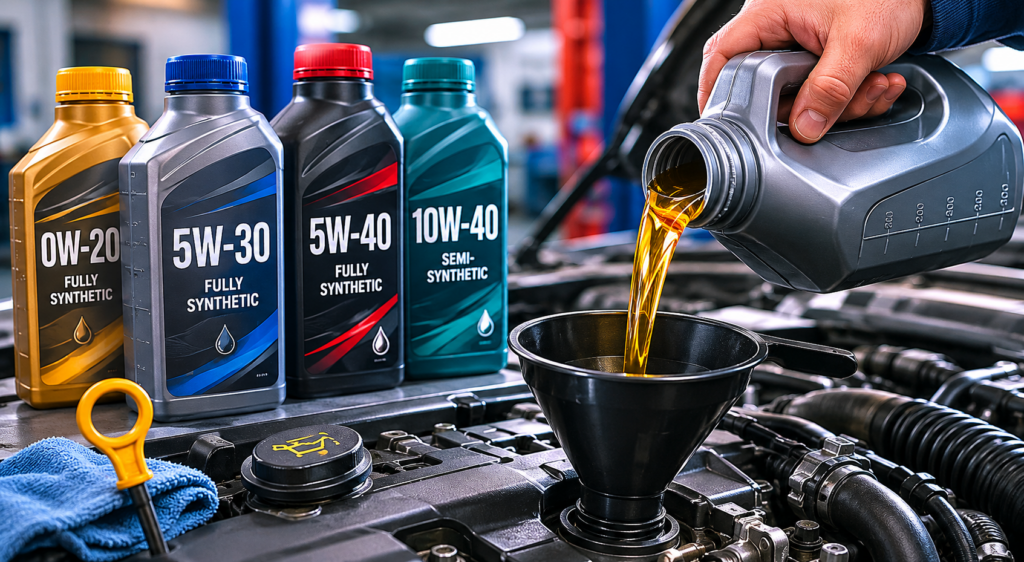
Choosing the right engine oil can feel surprisingly complicated. Walk into any motor factor or browse online and you will see shelves full of options labelled 0W-20, 5W-30, 10W-40 and more. To many drivers, these numbers mean very little, but choosing the correct oil is one of the most important parts of maintaining your car.
The right oil helps protect your engine, improves efficiency, supports smoother cold starts and can even help reduce long-term repair costs. On the other hand, using the wrong oil grade may increase engine wear, reduce fuel economy and potentially damage modern emissions systems.
Understanding engine oil grades does not require mechanical expertise. Once you know what the labels mean, choosing the correct oil becomes far simpler.
What Does Engine Oil Actually Do?
Engine oil does far more than simply lubricate moving parts. Modern oils are designed to protect the engine in several ways at once.
Oil helps reduce friction between metal components, preventing excessive wear while the engine is running. It also helps remove heat from internal parts, keeping temperatures under control during long journeys or heavy traffic.
In addition, engine oil carries dirt, carbon deposits and contaminants away from sensitive engine components. It also helps prevent corrosion and reduces sludge build-up over time.
Without the correct oil, engines would wear out far more quickly and become increasingly inefficient.
Understanding Engine Oil Grades
The numbers shown on engine oil packaging refer to viscosity. Viscosity simply means how thick or thin the oil is under different temperatures.
Most modern oils are known as multi-grade oils, which means they are designed to perform well in both cold and hot conditions.
Take 5W-30 as an example.
The first number, before the “W”, refers to the oil’s performance during cold starts. The “W” stands for winter. Lower numbers flow more easily in colder temperatures.
The second number refers to the oil’s thickness when the engine reaches operating temperature. Higher numbers provide thicker protection at higher temperatures.
So, a 5W-30 oil flows well during cold starts while still providing suitable protection once the engine becomes hot.
A 0W-20 oil will flow even more easily in very cold conditions, while a 10W-40 oil will generally be thicker when hot.
Why Viscosity Matters
Cold starts are one of the most demanding moments for an engine. When the engine has been sitting overnight, oil drains away from many internal parts. The oil must quickly circulate again when the car starts.
An oil with a lower winter rating, such as 0W or 5W, reaches critical components faster in cold temperatures. This reduces wear during startup.
At the same time, the oil must remain thick enough once the engine is fully warm. If it becomes too thin, it may not provide enough protection under load or high temperatures.
Manufacturers carefully design engines around specific oil grades, which is why following the recommended specification is so important.
Common Engine Oil Grades Explained
0W-20
This is a very low-viscosity oil commonly used in modern fuel-efficient petrol engines and hybrid vehicles. It helps reduce internal resistance and improve fuel economy.
Many newer vehicles are specifically designed for this thinner oil.
5W-30
One of the most common oil grades in the UK. It works well across a wide range of temperatures and suits many modern petrol and diesel vehicles.
It offers a good balance between cold-start performance and engine protection.
5W-40
Often used in turbocharged or performance-focused engines. It provides similar cold-start protection to 5W-30 but remains slightly thicker at operating temperature.
This can offer additional protection in higher-stress conditions.
10W-40
More commonly found in older or higher-mileage vehicles. The thicker hot viscosity can help maintain oil pressure and reduce consumption in engines with greater wear.
However, it may not suit many newer engines designed for thinner oils.
Synthetic vs Semi-Synthetic vs Mineral Oil
Engine oils are also divided into different base types.
Fully Synthetic Oil
Fully synthetic oil is highly refined and designed for maximum performance and protection. It flows better at low temperatures, performs well under stress and typically lasts longer between changes.
Most modern vehicles now require fully synthetic oil.
Semi-Synthetic Oil
Semi-synthetic oil combines mineral oil with synthetic additives. It offers improved protection compared with standard mineral oil while remaining more affordable than fully synthetic options.
It is often suitable for older everyday vehicles.
Mineral Oil
Mineral oil is the most traditional type of engine oil. It is generally thicker and less refined than synthetic oils.
Although still used in some classic or older vehicles, it is far less common in modern engines.
What Are API and ACEA Standards?
Oil grades are not just about viscosity. Modern engine oils must also meet quality and performance standards.
Two important systems are API and ACEA.
API stands for the American Petroleum Institute. API ratings indicate how well the oil protects against wear, sludge and oxidation.
Petrol engine oils use API “S” ratings, while diesel oils use API “C” ratings.
ACEA stands for the European Automobile Manufacturers’ Association. ACEA standards are widely used across European vehicles and focus heavily on emissions systems and engine compatibility.
For example:
- ACEA A/B oils are typically designed for petrol and diesel passenger cars
- ACEA C oils are designed for vehicles fitted with diesel particulate filters and catalytic converters
Modern engines often require very specific ACEA approvals, especially diesel vehicles with emissions control systems.
Why Using the Wrong Oil Can Cause Problems
Using the incorrect oil may not cause immediate damage, but it can create problems over time.
Oil that is too thick may circulate poorly during cold starts, increasing wear and reducing fuel efficiency.
Oil that is too thin may struggle to protect components properly under high temperatures and heavy loads.
Modern emissions systems can also be sensitive to incorrect oil specifications. Using unsuitable oil in diesel vehicles with particulate filters may contribute to blockages and expensive repairs.
Incorrect oil may also affect warranty coverage if the oil does not meet the manufacturer’s approved specification.
How to Find the Correct Oil for Your Car
The safest approach is always to follow the manufacturer’s recommendation.
You can usually find the correct oil specification in:
- The owner’s handbook
- Service records
- The oil filler cap
- Online oil finder tools
- Information provided by a trusted garage
Many modern vehicles require not only a specific viscosity grade but also a precise manufacturer approval code.
For example, two oils may both be labelled 5W-30, but only one may meet the required ACEA or manufacturer specification for your engine.
Do Driving Conditions Affect Oil Choice?
Driving style and conditions can also influence oil performance.
Frequent short journeys prevent the engine from fully warming up, placing greater strain on the oil.
Heavy traffic, towing, high-mileage driving and performance driving can all increase operating temperatures and stress levels.
Drivers covering high annual mileage or regularly driving under demanding conditions may benefit from more frequent oil changes, even when using high-quality synthetic oil.
Signs Your Engine Oil May Need Attention
There are several warning signs that your oil may need checking or replacing.
These include:
- Engine warning lights
- Excessive exhaust smoke
- Noisy engine operation
- Burning oil smells
- Reduced performance
- Increased oil consumption
Regular servicing helps identify oil-related issues before they become serious.
Protection, Efficiency & Reliability
Understanding engine oil grades is far simpler once you know what the numbers mean. The viscosity rating tells you how the oil behaves in cold and hot temperatures, while API and ACEA standards confirm whether the oil meets important performance requirements.
Choosing the correct oil helps protect your engine, improve efficiency and support long-term reliability. Modern engines are built around very specific oil specifications, so using the recommended product matters more than ever.
If you are unsure which oil your vehicle requires, checking the handbook or speaking with a trusted garage is always the safest option.