
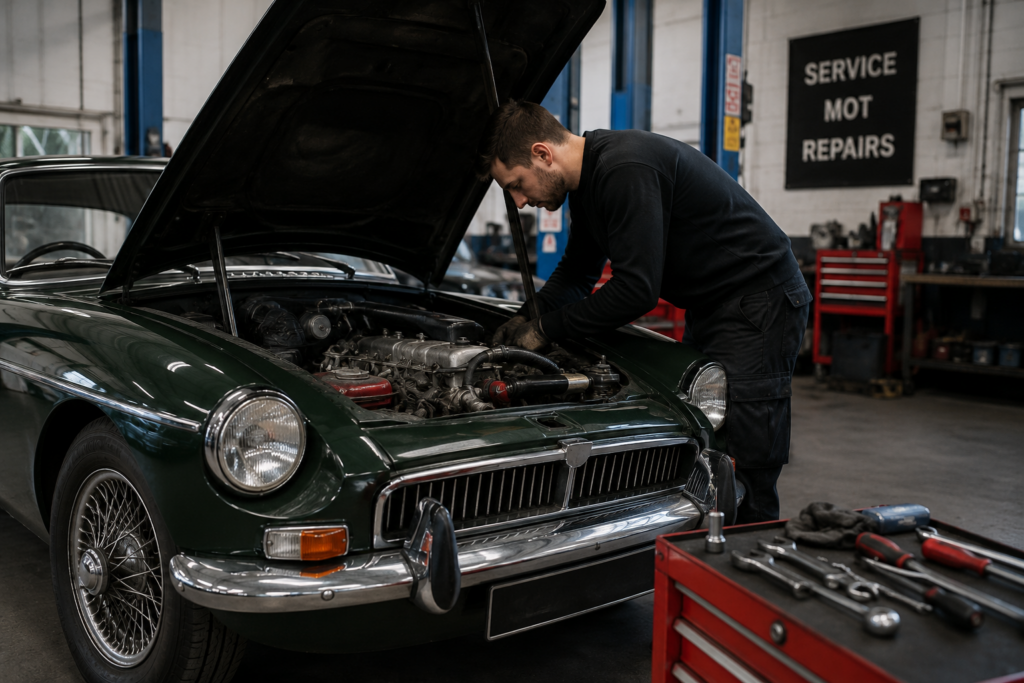
There is something special about driving a classic car. Whether it is the smell of old leather, the satisfying clunk of a heavy door closing, or the sound of a properly tuned engine on a quiet country road, classics have character modern cars often struggle to match.
But owning one is not all polished chrome and admiring glances at petrol stations. Classic cars need regular attention if they are going to stay safe, reliable and road-legal. In fact, older vehicles often need more care than modern ones, even if they spend most of their lives tucked away in the garage waiting for a sunny Sunday.
Many owners assume low mileage means low maintenance. Unfortunately, classic cars are just as capable of developing problems while standing still as they are while being driven.
What Counts as a Classic Car?
In the UK, the term “classic car” gets used quite loosely. For some people, anything from the 1980s qualifies. For others, it needs to have chrome bumpers, carburettors and a cassette player that still stubbornly refuses to eject.
Legally speaking, things are slightly different. Vehicles over 40 years old can qualify as historic vehicles under DVLA rules. This can bring certain benefits, including exemption from Vehicle Excise Duty and potentially exemption from MOT testing.
However, there is an important catch. The vehicle must not have undergone substantial changes. Significant modifications to the chassis, engine or suspension may affect eligibility.
Even if your car qualifies as a historic vehicle, it still needs to be roadworthy at all times.
Understanding MOT Exemption
This is where confusion often creeps in.
Many classic cars over 40 years old are eligible for MOT exemption, but that does not mean they are exempt from maintenance or safety requirements. Owners remain legally responsible for ensuring the vehicle is safe to drive.
In simple terms, if your brakes fail, your tyres are dangerous or your steering is unsafe, “it is MOT exempt” will not be much help at the roadside.
That is why many classic owners still choose to book annual MOT tests voluntarily. A fresh pair of experienced eyes can spot problems before they become expensive or dangerous. Think of it as less of a legal obligation and more of a yearly health check.
After all, classic cars were built in an era when “advanced safety systems” often meant a passenger hanging on tightly around corners.
Why Regular Servicing Matters
Classic cars age differently from modern vehicles. Even if they cover very few miles, components naturally deteriorate over time.
Rubber seals harden and crack. Brake fluid absorbs moisture. Fuel systems become clogged. Electrical connections corrode. Batteries weaken. Oils lose effectiveness. Tyres age even if the tread still looks healthy.
One of the biggest problems with classic cars is inactivity. Vehicles left sitting for long periods can suffer seized brakes, stale fuel and corrosion. Ironically, some classics deteriorate faster in storage than they do when driven regularly.
Modern fuel can also create issues for older vehicles. Ethanol-blended petrol can damage seals, hoses and fuel lines designed decades before modern fuel formulas existed.
Regular servicing helps identify these problems early. Catching a minor coolant leak or worn suspension bush today is considerably cheaper than rebuilding an overheated engine six months later.
A neglected classic has a habit of turning into an expensive driveway ornament surprisingly quickly.
Common Problems Classic Car Owners Miss
Some issues develop slowly enough that owners barely notice them until a breakdown or MOT inspection highlights the problem.
Ageing Tyres
A classic car may have excellent tread depth but tyres more than ten years old can still become unsafe due to cracking and hardening rubber.
Brake System Problems
Older brake cylinders and hoses can deteriorate internally even if they appear fine externally. Cars that sit unused are especially vulnerable to seized callipers and sticking wheel cylinders.
Cooling System Corrosion
Corrosion inside radiators and engine blocks can build gradually over time, reducing efficiency and increasing overheating risks during warmer weather.
Electrical Faults
Weak charging systems, poor earth connections and ageing wiring can cause intermittent faults that seem to appear only at the worst possible moment.
Oil Leaks
Most classic owners expect a few drips here and there, but persistent leaks can indicate worn seals or excessive crankcase pressure that should not be ignored.
The good news is that regular inspections usually catch these problems before they become serious.
Seasonal Servicing Tips
Classic cars benefit enormously from seasonal maintenance routines.
Preparing for Summer
Before summer arrives, it is worth checking the cooling system thoroughly. Warm weather and slow-moving traffic can quickly expose weaknesses in radiators, hoses or water pumps.
Battery condition should also be checked before the driving season begins. A battery that survived winter may still struggle after months of limited use.
Tyre pressures, brake performance and fluid levels should all be inspected before longer drives or classic car events.
Preparing for Winter Storage
Fuel stabiliser can help prevent fuel degradation during long lay-ups, while proper battery maintenance reduces the chances of returning to a completely lifeless car in spring.
Storage conditions are important too. Damp garages encourage rust and corrosion, especially underneath the vehicle where moisture can linger unnoticed.
Many owners believe starting the engine occasionally during winter is enough. In reality, short idle periods without fully warming the car can sometimes do more harm than good by introducing condensation into the exhaust and engine oil.
Choosing the Right Garage for a Classic Car
Not every garage is comfortable working on older vehicles. Modern diagnostics are helpful, but classic cars often require experience, patience and traditional fault-finding skills.
A good classic-friendly garage understands that preventative maintenance is essential. They know how to inspect older components properly, spot age-related wear and explain issues clearly without drowning customers in technical jargon.
Communication matters too. Owners want honest advice about what genuinely needs attention and what can reasonably wait until a future visit.
Classic cars are often emotionally valuable as well as financially valuable. Trusting somebody with a cherished vehicle is very different from dropping off an everyday commuter car for a quick oil change.
At Windmill Garage, the focus is always on practical, reliable servicing that keeps vehicles safe and enjoyable to drive. Whether it is a regular inspection, brake work or diagnosing an annoying intermittent fault that only appears when it rains, experienced servicing can make classic ownership far less stressful.
Keeping Classics on the Road
Classic cars are meant to be driven and enjoyed. Regular servicing not only helps keep them road-legal but also protects reliability, safety and long-term value.
MOT exemption does not remove responsibility, and low mileage does not guarantee good condition. Older vehicles need consistent care, sensible inspections and preventative maintenance to stay healthy.
The upside is simple. A well-maintained classic is far more enjoyable to own than one constantly threatening to break down at every roundabout.
If your classic could do with a fresh set of expert eyes, Windmill Garage can help keep it reliable, safe and ready for the next sunny drive.