
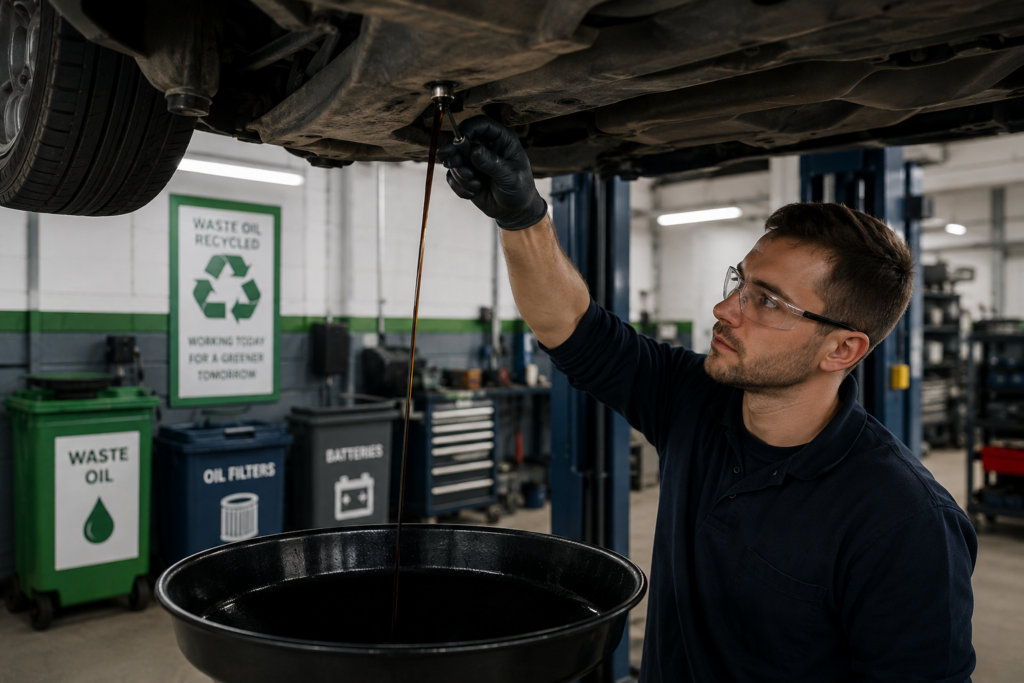
Most drivers understand that regular oil changes are important. Your engine needs clean oil to stay lubricated, cool, and running smoothly. What many people do not think about is what happens to the old oil once it leaves the car.
That black, dirty liquid sitting in a drain pan after a service is not just messy. It is classified as hazardous waste. If handled incorrectly, used engine oil can cause serious environmental damage, contaminate water supplies, and harm wildlife.
The good news is that modern garages are becoming far more responsible with how they manage waste oil and other servicing materials. Eco-friendly servicing is no longer a niche idea for hybrid drivers wearing sandals and hugging trees. It is quickly becoming part of good workshop practice across the motor industry.
At its core, cutting waste oil is simply about working smarter, cleaner, and more efficiently.
Why Waste Oil Matters More Than You Might Think
Engine oil works hard. As it moves around your engine, it picks up dirt, tiny metal particles, carbon deposits, and other contaminants. Over time, the oil breaks down and loses its ability to protect the engine properly.
That is why regular servicing matters.
Once oil becomes contaminated, it needs to be removed safely and replaced with fresh oil. The old oil cannot simply be poured away like yesterday’s cup of tea. Used engine oil contains harmful substances that can damage soil and waterways if disposed of incorrectly.
Even small amounts of waste oil can have a surprisingly large impact on the environment. One litre of oil has the potential to contaminate huge quantities of water. That is why garages must follow strict procedures for storing, collecting, and recycling used oil.
Responsible servicing is not just about protecting engines. It is also about protecting the environment around us.
What Happens During an Oil Change?
During a routine service, the old engine oil is drained from the vehicle and collected in sealed containers. The oil filter is usually replaced at the same time because it also becomes clogged with contaminants.
Fresh oil is then added using the correct grade and quantity recommended by the manufacturer.
Think of engine oil like a sponge. At first, it absorbs dirt and debris effectively. Eventually, though, the sponge becomes saturated and cannot do its job properly anymore. Continuing to run dirty oil through an engine can increase wear, reduce fuel efficiency, and shorten the life of key components.
A proper service restores the engine’s lubrication and helps keep everything running efficiently.
The important part comes afterwards. Once the old oil leaves the vehicle, it must be handled carefully to avoid leaks, spills, or contamination.
How Modern Garages Reduce Waste Oil
Eco-friendly servicing is not about waving a green flag and hoping for the best. It comes down to practical workshop improvements that reduce waste while maintaining high standards of vehicle care.
One of the simplest ways garages reduce waste oil is by using more accurate dispensing systems. Older methods often resulted in excess oil being used unnecessarily. Modern equipment allows technicians to add precise quantities, reducing both waste and costs.
Better extraction systems also help. Modern vacuum and drainage equipment captures used oil more efficiently, lowering the risk of spills and contamination inside the workshop.
Storage plays a major role too. Responsible garages use sealed containers and designated storage areas for hazardous waste. This prevents leaks and keeps harmful materials away from drains and surrounding ground.
Staff training is equally important. A good technician understands not only how to service a vehicle properly, but also how to handle waste safely and responsibly. That includes separating oil filters, fluids, batteries, and other hazardous materials for recycling or specialist disposal.
It may not sound glamorous, but these small operational improvements make a significant difference over time.
The Benefits of Recycling Used Oil
Here is the surprising part. Used engine oil is not always the end of the road for that oil.
Once collected, waste oil can often be cleaned, refined, and processed for reuse. In many cases, recycled oil can be turned into new lubricants, industrial fuels, or other petroleum-based products.
Recycling used oil helps reduce demand for crude oil extraction and lowers the environmental impact associated with producing new oil products from scratch.
It also prevents harmful waste from ending up where it should not.
The process itself is highly regulated in the UK, with licensed waste carriers responsible for transporting and processing used oil safely. Responsible garages work with certified waste management companies to ensure everything is handled correctly.
For drivers, this means choosing the right garage can genuinely contribute to reducing environmental harm without requiring any major lifestyle changes.
You still get your car serviced as normal. The difference is that the workshop behind the scenes is operating more responsibly.
Eco-Friendly Garages Are Doing More Than Just Recycling Oil
Waste oil is only one piece of the puzzle. Many modern garages are improving sustainability in other practical ways too.
LED workshop lighting is becoming increasingly common because it uses less energy and lasts longer than traditional lighting systems.
Digital service records and invoices help reduce unnecessary paper use.
Many garages now recycle tyres, batteries, metal components, and oil filters rather than sending them directly to landfill.
Some workshops are also switching to environmentally safer cleaning products with lower chemical emissions.
Even small changes, such as improving insulation or using energy-efficient equipment, can reduce a garage’s environmental footprint over time.
Importantly, many of these changes benefit customers as well. Efficient workshops often operate more cleanly, safely, and professionally. Sustainability and quality service tend to go hand in hand.
What Drivers Can Do to Help
You do not need to become a mechanic to make more environmentally responsible decisions about your car.
One of the best things you can do is simply stick to your recommended service schedule. Leaving oil changes too long can increase contamination and place more strain on the engine.
It is also important not to attempt improper oil disposal at home. Pouring used oil down drains, onto soil, or into general waste bins can cause serious environmental damage.
If you carry out DIY maintenance, always take used oil to an authorised recycling centre.
You can also ask your garage how they handle waste oil and recycling. A trustworthy garage should have no problem explaining their processes clearly.
Another smart move is using the correct oil grade for your vehicle. Modern engines are designed to work with specific lubricants, and using the wrong type can reduce efficiency and increase wear.
Responsible servicing is ultimately a partnership between drivers and garages.
Eco-Friendly Servicing Does Not Mean Compromising Performance
Some people hear the phrase “eco-friendly” and immediately picture compromise. Slower performance. Higher costs. More hassle.
Thankfully, that is not how modern vehicle servicing works.
In reality, efficient servicing practices often improve vehicle reliability and workshop standards at the same time.
Cleaner oil systems help engines run more efficiently. Better waste management creates safer working environments. Modern equipment improves accuracy and consistency during servicing.
Responsible garages are not cutting corners. If anything, they are paying closer attention to the details that matter.
The goal is simple. Keep vehicles running properly while reducing unnecessary waste wherever possible.
That is not trendy marketing. That is just good servicing.
Responsible Servicing Benefits Both Your Car and the Environment
Most drivers never see what happens behind the workshop doors after an oil change. They simply collect the keys, drive home, and carry on with their day.
But responsible garages know that proper servicing does not end once the fresh oil goes into the engine.
Safe waste handling, responsible recycling, and cleaner workshop practices all play a role in protecting the environment while maintaining high standards of vehicle care.
Choosing a garage that takes those responsibilities seriously means you are not only looking after your vehicle. You are also supporting smarter, cleaner practices within the motor industry.
And honestly, that sounds far better than pouring old engine oil into a hedge and hoping for the best.