
Modern cars are packed with technology designed to help drivers keep their vehicles in good condition. One of the most common reminders is the service light. Whether it appears after an oil change interval or a scheduled inspection period, it is designed to tell you when maintenance is due.
For many drivers, the next question is simple: can you reset the service light yourself, or should you leave it to a garage?
The answer depends on your vehicle, your confidence with DIY maintenance, and whether the reset is hiding a deeper issue. In some cases, resetting the light is quick and harmless. In others, it can create confusion or even lead to missed problems.
What Does a Service Light Actually Mean?
A service light is different from a warning light. Warning lights usually indicate a fault or safety concern, such as low oil pressure, overheating, or brake system problems. A service light is generally a maintenance reminder.
Manufacturers programme these reminders based on:
- Mileage
- Time since the last service
- Driving style and conditions
- Engine operating data
Some vehicles use fixed intervals, such as every 12 months or 10,000 miles. Others use flexible servicing systems that monitor how the car is driven. Frequent short journeys, stop-start traffic, or hard driving may shorten the service interval automatically.
Once servicing is completed, the system must be reset so the vehicle can begin counting down to the next service.
Why Does the Service Light Need Resetting?
Even after a full service has been completed, the service light usually remains on until it is manually reset. This is because the vehicle cannot automatically detect that maintenance work has been carried out.
Resetting the service light:
- Starts the next maintenance countdown
- Clears dashboard reminders
- Keeps servicing records accurate
- Helps maintain resale value
- Prevents unnecessary alerts
Without a reset, the reminder may continue appearing every time the car is started, even though the work has already been completed.
Can You Reset a Service Light Yourself?
In many cases, yes.
A large number of vehicles allow owners to reset service reminders using buttons on the dashboard, steering wheel controls, or ignition sequences. Some systems only require a few simple steps.
Typical methods include:
- Holding the trip reset button while turning on the ignition
- Using dashboard menus
- Pressing accelerator and brake pedal combinations
- Navigating the infotainment system
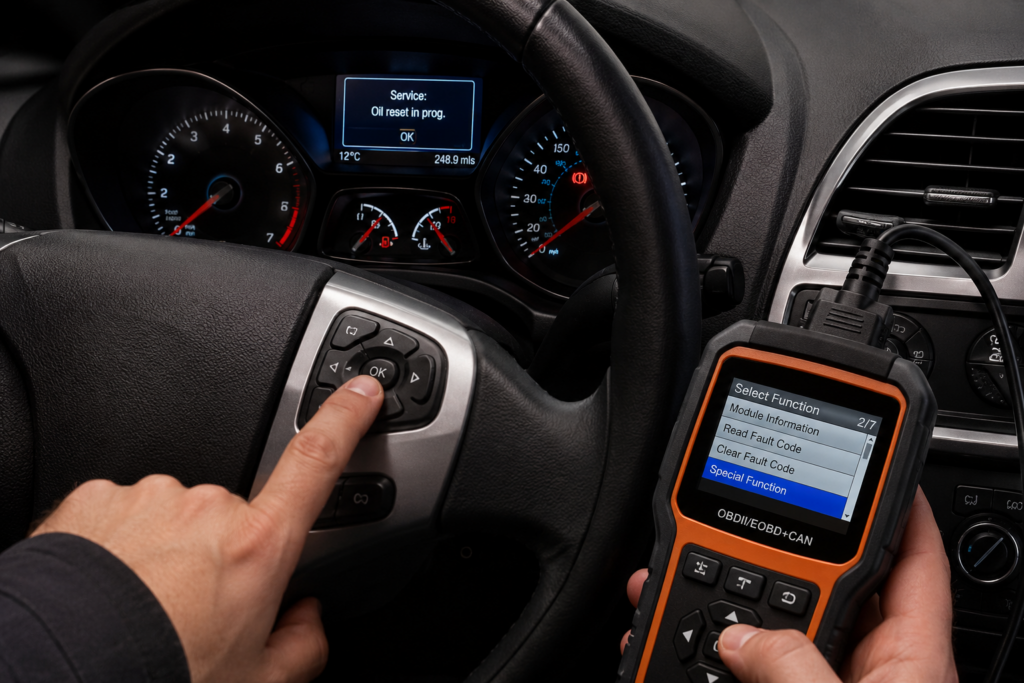
- Connecting an OBD diagnostic scanner
For example, many BMW models allow service resets through the instrument cluster without specialist equipment. Other manufacturers use similar systems.
However, newer vehicles are becoming increasingly complex. Some premium brands and newer hybrid or electric vehicles may require manufacturer-specific software or advanced diagnostic tools.
Common DIY Reset Methods
Dashboard Button Resets
This is the simplest method and is common on older or mainstream vehicles. Drivers typically use the ignition switch and odometer reset button to access a hidden service menu.
While convenient, the exact sequence varies between manufacturers and models. Following incorrect instructions can lead to confusion or failed resets.
Infotainment System Menus
Many modern cars allow service resets through touchscreen settings menus. These systems are generally easier to use but still require the correct sequence.
Some vehicles separate oil service reminders from inspection reminders, so resetting the wrong item may leave alerts active.
OBD Scanner Resets
OBD scanners plug into the vehicle’s diagnostic port and communicate directly with onboard systems.
Basic scanners can:
- Read fault codes
- Clear some service reminders
- Display engine data
More advanced scanners can:
- Reset inspection intervals
- Register batteries
- Perform electronic brake resets
- Access manufacturer-specific systems
However, not all scanners work with every vehicle. Some cheaper devices only provide limited functionality.
The Benefits of DIY Service Light Resets
Saves Time and Money
If you already perform your own servicing, resetting the light yourself avoids an unnecessary garage visit.
Even garages may charge diagnostic fees for something that takes only a few minutes.
Convenient for Home Mechanics
Drivers who regularly change oil, filters, or brakes at home often prefer full control over the maintenance process.
Learning how to reset service reminders is a natural extension of DIY servicing.
OBD Tools Are More Affordable
Diagnostic scanners are now much cheaper than they once were. Entry-level devices are widely available and can help with basic maintenance tasks.
For households with multiple vehicles, a scanner may become a worthwhile long-term investment.
The Risks of DIY Resets
Although resetting a service light sounds simple, there are potential downsides.
Resetting Without Servicing
The biggest concern is resetting the reminder without actually carrying out the required maintenance.
Ignoring servicing intervals can increase engine wear, reduce reliability, and lead to expensive repairs later.
The reset should always happen after the service has been completed, not instead of it.
Clearing Important Information
Some systems combine service reminders with inspection notices or maintenance tracking data.
An incorrect reset could:
- Change servicing schedules
- Remove useful reminders
- Interfere with flexible interval calculations
Certain vehicles may even revert from flexible servicing to fixed intervals after manual resets.
Missing Genuine Faults
Drivers sometimes mistake warning lights for service reminders.
If a dashboard light relates to:
- Oil pressure
- Engine management
- Emissions systems
- Brake faults
simply resetting it will not solve the underlying problem.
In some cases, repeatedly clearing alerts can delay important repairs.
Vehicle Compatibility Problems
Luxury brands and newer vehicles often require specialist software.
Land Rover, Audi, BMW, Mercedes-Benz, and other premium manufacturers may restrict certain resets to dealer-level tools or advanced aftermarket diagnostics.
A failed reset attempt can occasionally create additional warning messages.
When Professional Help Is the Better Option
DIY resets are not always the right choice.
Professional assistance is usually sensible when:
- Warning lights remain after servicing
- Fault codes are present
- The car is still under warranty
- The vehicle is hybrid or electric
- Advanced electronic systems are involved
- You are unsure which light is displayed
Professional garages also verify whether servicing has actually been completed correctly before resetting the system.
That extra inspection can identify leaks, worn components, or safety concerns that might otherwise go unnoticed.
Should You Buy an OBD Scanner?
For enthusiastic DIY drivers, an OBD scanner can be useful.
A basic scanner is often enough for:
- Reading engine codes
- Clearing minor alerts
- Checking sensor data
- Resetting simple service reminders
More advanced scanners offer additional features but cost significantly more.
Before buying one, consider:
- Your vehicle make and model
- Whether service resets are supported
- Software subscription costs
- Frequency of DIY servicing
Casual drivers who only service their cars occasionally may find professional servicing more practical overall.
A Simple DIY Reset Checklist
Before resetting a service light yourself, make sure you:
- Complete the required maintenance first
- Check the owner’s manual
- Confirm the correct reset procedure
- Verify oil and fluid levels
- Ensure the correct service item is selected
- Double-check the reset has succeeded
- Monitor for any returning warning lights
If the light reappears quickly, further diagnostics may be needed.
Should You DIY a Service Light Reset?
For many vehicles, resetting a service light is perfectly safe and straightforward. If you are confident carrying out routine maintenance and follow the correct procedure, it can save time and money.
However, resetting a light should never replace proper servicing, and drivers should be careful not to ignore genuine warning signs.
Modern vehicles are increasingly reliant on complex electronic systems. While a simple reset may work on one car, another may require specialist diagnostic equipment and technical knowledge.
If in doubt, professional advice is usually the safest option. A correctly serviced and properly inspected vehicle will always matter more than simply turning a dashboard light off.