
Most drivers know to keep an eye on tyres, oil levels, and warning lights. Brake hoses, however, rarely get a second thought until something starts feeling wrong.
The problem is that brake hoses play a huge role in your car’s ability to stop safely. When they begin to wear out, the warning signs can be subtle at first. Ignore them for too long and what starts as a small issue could turn into a serious safety risk.
If your brake pedal suddenly feels softer than usual, your car pulls when braking, or you notice fluid around a wheel, your brake hoses could be trying to tell you something.
Here’s what every driver should know about spotting brake hose wear early.
What Does a Brake Hose Actually Do?
Your braking system relies on hydraulic pressure to work properly. When you press the brake pedal, brake fluid travels through pipes and flexible hoses to activate the brakes at each wheel.
The solid metal brake pipes on your car cannot move with the suspension or steering, so flexible rubber brake hoses are fitted near the wheels to handle that movement.
Every time you drive, steer, brake, or go over bumps, those hoses flex constantly. Over the years, heat, moisture, road salt, dirt, and age slowly weaken them.
Unlike tyres or brake pads, brake hoses are often out of sight and out of mind. Many drivers never inspect them until an MOT or service picks up a problem.
Common Signs of Brake Hose Wear
Brake hoses rarely fail without warning. Your car will often give you clues before things become dangerous.
A Soft or Spongy Brake Pedal
One of the most common warning signs is a brake pedal that feels softer than normal.
Worn hoses can weaken internally and expand slightly when pressure builds during braking. Instead of delivering firm hydraulic pressure, some of that force gets lost.
Drivers often describe it as the brake pedal feeling “spongy” or needing extra pressure to stop the car properly.
If your brake pedal suddenly changes feel, it is always worth getting checked.
Visible Cracks or Bulges
Rubber naturally deteriorates over time, especially on vehicles exposed to changing weather conditions and road salt.
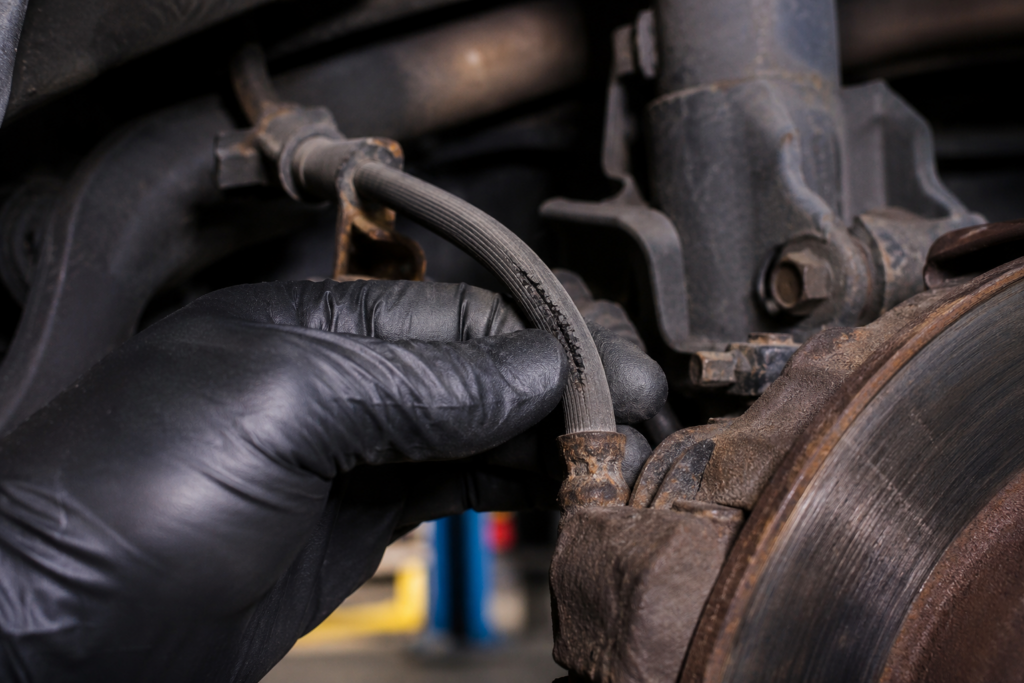
If you can safely see the brake hoses behind your wheels, look for:
- Cracks in the rubber
- Fraying or splits
- Bulges or swelling
- Signs of rubbing or damage
Bulging brake hoses are particularly serious because they suggest the hose structure is weakening internally. In some cases, they can burst under braking pressure.
Brake Fluid Leaks
Brake fluid leaks should never be ignored.
A leaking brake hose may leave wet patches near the wheels or underneath the vehicle. Brake fluid often has a slightly oily texture and can appear clear to light brown in colour.
Even a small leak reduces hydraulic pressure in the braking system, which affects stopping performance.
In more severe cases, drivers may notice the brake warning light appearing on the dashboard due to falling fluid levels.
The Car Pulls When Braking
If your car suddenly pulls to one side while braking, a restricted or damaged brake hose could be the cause.
Sometimes the hose can collapse internally, limiting brake fluid flow to one wheel. This can lead to uneven braking force across the car.
Many drivers initially assume the issue is wheel alignment or tyre related, but braking components are often involved.
Longer Stopping Distances
Modern braking systems are designed to react quickly and consistently.
If your car suddenly takes longer to stop than it used to, especially in wet weather or motorway traffic, worn brake hoses could be contributing to the issue.
This is particularly important for family cars and business vehicles that spend a lot of time on busy roads.
What Causes Brake Hoses to Wear Out?
Brake hoses are designed to last for years, but they are constantly exposed to harsh conditions.
Common causes of wear include:
Ageing Rubber
Like many rubber components on a vehicle, brake hoses naturally become brittle with age. Even cars with lower mileage are not immune to this.
Heat from Braking
Braking generates significant heat, especially during stop-start driving or long downhill journeys. Over time, repeated heating and cooling weakens the hose material.
Road Salt and Moisture
UK roads can be tough on braking systems, particularly during winter. Salt, water, and grime accelerate corrosion and rubber deterioration.
Constant Flexing
Brake hoses flex every time the suspension moves or the steering turns. Years of movement gradually weaken the internal structure.
Lack of Regular Inspections
Brake hose deterioration can begin internally before obvious external damage appears. That is why regular servicing and inspections matter.
Can Brake Hose Problems Fail an MOT?
Yes, absolutely.
Brake hoses are a key safety component inspected during an MOT test. Excessively damaged, leaking, twisted, or bulging hoses can result in a failure.
In serious cases where brake fluid is leaking heavily or braking performance is affected, the defect may even be classed as dangerous.
Many drivers are surprised to learn that something as small as a cracked hose can quickly become an MOT issue if left unchecked.
The good news is that brake hose problems are usually straightforward to fix when caught early.
How Long Do Brake Hoses Last?
There is no exact replacement interval for every vehicle, but brake hoses commonly last anywhere between six and fifteen years depending on driving conditions and maintenance.
Cars driven regularly in coastal areas or through winter road salt often experience faster deterioration.
Urban stop-start driving can also increase wear due to repeated braking and heat cycles.
Older vehicles are naturally more likely to develop hose issues simply because rubber components degrade over time.
If your car is over six years old and the brake hoses have never been inspected closely, it is worth having them checked during servicing.
Why Early Inspection Saves Money
Catching brake hose wear early can prevent much larger repair bills later on.
A small hose issue left untreated can eventually lead to:
- Brake fluid contamination
- Damaged brake callipers
- Premature brake pad wear
- Reduced braking performance
- Breakdown recovery costs
- More extensive brake repairs
Most importantly, early inspection helps keep you and your passengers safe.
Brake hoses are one of those components you would much rather replace during a planned garage visit than discover failing during an emergency stop in heavy rain.
When Should You Book a Brake Inspection?
It is worth arranging a brake inspection if you notice:
- A soft or spongy brake pedal
- Fluid leaks near the wheels
- The car pulling when braking
- Brake warning lights
- Visible hose damage
- Longer stopping distances
- Unusual braking behaviour
Even if everything feels normal, annual servicing and MOT tests are ideal opportunities to have your braking system checked professionally.
Why Acting Early Could Save You Money and Keep You Safe
Brake hose wear is one of those problems many drivers never think about until symptoms appear. The trouble is that braking issues rarely improve on their own.
The earlier worn hoses are identified, the easier and more affordable the repair usually becomes.
If your brakes feel different, your pedal feels softer, or you simply want peace of mind before your next MOT, having the system inspected is always the sensible option.
At Windmill Garage, we help drivers spot small issues before they become major repairs, keeping vehicles safe, reliable, and ready for the road.