
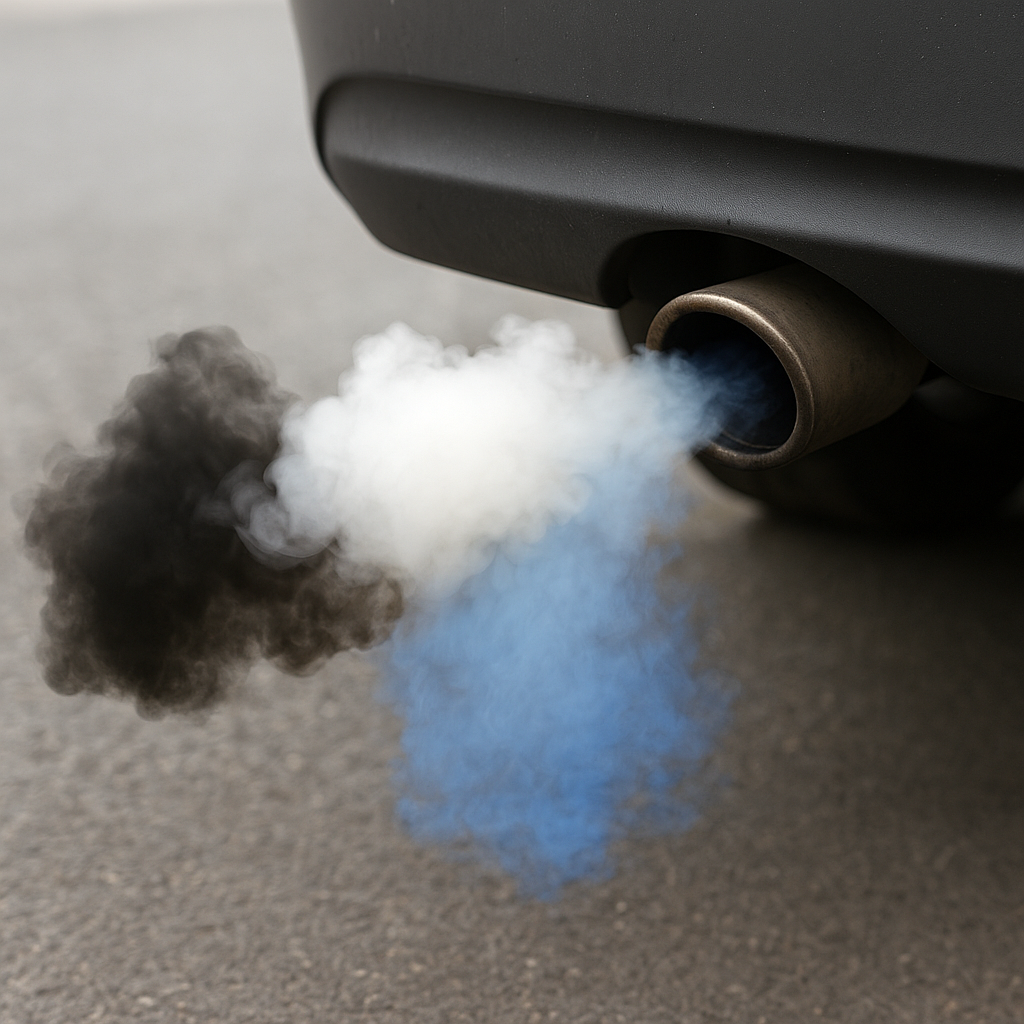
Smoke from your car’s exhaust is usually a clue that something is not quite right, but the colour matters. Blue smoke usually means burning oil, persistent white smoke can point to coolant entering the engine, and black smoke generally means too much fuel is being burned. A little white vapour on a cold start, though, can simply be condensation.
Here is the quick version.
| Exhaust smoke colour | What it usually means | What to do |
|---|---|---|
| Blue smoke | Engine oil is being burned | Check the oil level and have persistent smoke investigated |
| White smoke | Condensation when cold, or coolant entering the engine if thick and persistent | See whether it clears as the engine warms. If it does not, get the car checked |
| Black smoke | Too much fuel or not enough air, causing incomplete combustion | Have the fuel, air intake and emissions systems checked |
The colour gets you pointed in the right direction. When the smoke appears, how long it lasts and whether the car has other symptoms help narrow things down further.
Recognising Exhaust Smoke
Before assuming the worst, pay attention to exactly what the car is doing.
Does the smoke only appear when you first start the engine? Does it continue once the car is warm? Is it worse when you accelerate? Have you noticed the engine using more oil or coolant, running roughly, losing power or using more fuel?
Those details matter because exhaust smoke is a symptom rather than a diagnosis. Two cars producing a similar-looking cloud can have quite different faults underneath.
Cold weather is a good example. Thin white vapour from the exhaust on a chilly morning is normally water vapour caused by condensation. If it disappears as the exhaust warms up and everything else is behaving normally, there may be nothing wrong.
Thick smoke that keeps coming is a different matter.
Colour-by-Colour Causes and Fixes
Black Smoke
Black exhaust smoke usually means the engine is burning too much fuel for the amount of air available. You may hear this described as the engine “running rich”.
Possible causes include a restricted air supply, problems with fuel injectors or faults with sensors used by the engine management system. Diesel vehicles can have additional emissions-system issues that need proper diagnosis rather than guesswork.
You may also notice poor fuel economy, reduced performance or an engine management warning light.
There is a temptation to start replacing parts until the smoke disappears. That can become expensive surprisingly quickly. If the cause is not obvious, diagnostics are a better starting point because they help establish what is actually wrong before parts are ordered.
Windmill Garage can carry out vehicle diagnostics in Horndean. More information is available at https://www.windmillgarage.co.uk/services/diagnostics-horndean/.
White Smoke
Thin white vapour immediately after a cold start is often harmless condensation. Water collects in the exhaust system and turns to vapour as everything warms up.
The important question is whether it clears.
Thick white smoke that continues after the engine has reached normal temperature can indicate that coolant is entering the combustion chamber. Possible causes include a failed head gasket or damage elsewhere that allows coolant into the engine.
Watch for other symptoms too, particularly a falling coolant level or an engine temperature that is climbing above normal.
Do not open the cooling system while the engine is hot. If the car is overheating, or thick white smoke continues once it is warm, stop somewhere safe and arrange for the fault to be checked rather than carrying on and hoping it sorts itself out.
Engines are not generally known for fixing themselves.
Blue or Grey Smoke
Blue or blue-grey exhaust smoke commonly means engine oil is being burned.
Possible causes include worn piston rings, worn valve stem seals or an oil leak within a turbocharger on vehicles fitted with one. Other faults in the engine’s crankcase ventilation system can sometimes contribute too.
You might notice the smoke particularly when accelerating or after starting the engine. Increased oil consumption is another useful clue.
Checking the engine oil level is sensible, provided you follow the manufacturer’s procedure and do it safely. Do not simply add more oil without checking the level first, as overfilling can cause problems of its own.
If the level keeps dropping or blue smoke persists, the cause needs investigating. Burning oil can affect more than the engine itself, including exhaust emissions equipment.
What About Other Grey Smoke?
Not every exhaust plume fits neatly into blue, white or black. Lighting, temperature and the type of fault can make smoke appear grey or somewhere between colours.
That is why colour should be treated as a clue rather than a complete diagnosis. If the smoke is persistent, unusual for your car or accompanied by warning lights, increased fluid consumption or a change in performance, get it checked.
Can Exhaust Smoke Cause an MOT Failure?
Yes, certain visible exhaust smoke can result in an MOT failure.
Under the current DVSA MOT inspection manual, the tester visually checks smoke from the tailpipe. Dense blue smoke or clearly visible black smoke can result in the vehicle failing the test.
Cars subject to emissions testing must also meet the relevant emissions limits for their age and type. Diesel vehicles have their own opacity testing requirements, and manufacturer-fitted emissions equipment such as a diesel particulate filter must not be missing, obviously modified or obviously defective.
So if your MOT is approaching and the car has started smoking, dealing with the underlying fault beforehand makes more sense than simply presenting it for the test and seeing what happens.
You can find our MOT information at https://www.windmillgarage.co.uk/services/mot-horndean/ and our current published prices at https://www.windmillgarage.co.uk/prices/.
Preventive Maintenance to Cut Exhaust Smoke
Good maintenance cannot prevent every mechanical fault, but it can reduce the chances of problems being left until they become more serious.
Keep to the correct servicing schedule and use the engine oil specified for your car. Air and fuel filters should be replaced when required, while oil and coolant levels are worth checking between services.
Pay attention to warning lights too. A warning light alongside unusual smoke, rough running or poor fuel economy gives us useful information when diagnosing the fault.
Diesel drivers should also be aware of the diesel particulate filter, or DPF. Repeated short journeys can make it harder for some cars to complete the regeneration process used to deal with accumulated soot. If a DPF warning light appears, follow the instructions in your vehicle handbook rather than assuming a long, hard drive will cure every DPF problem.
Regular servicing gives us a chance to spot developing issues before they become the cloud following you down London Road. Details of our servicing are at https://www.windmillgarage.co.uk/services/service-horndean/.
When to Call Us at Windmill Garage
Bring your car in for an inspection if you notice persistent white smoke that does not clear, blue or grey smoke under acceleration, black smoke that appears regularly alongside higher fuel use or poor performance, or any combination of these signs.
The important bit is finding the cause rather than treating the colour itself. Diagnostics and inspection can establish whether the problem sits with the fuel system, oil control, cooling system, turbocharger, engine or exhaust emissions equipment.
We have been looking after cars in Horndean for over thirty-five years. We will tell you what needs doing now and what can wait, and agree the work with you before going ahead.
If you would like to speak to us first, contact Windmill Garage at https://www.windmillgarage.co.uk/contact-us/ or call 02392 571003.
Frequently Asked Questions
Is white smoke from the exhaust always a problem?
No. Thin white vapour when starting a cold engine is often condensation and should disappear as the engine and exhaust warm up. Thick white smoke that continues when the engine is hot needs investigating.
What does blue smoke from an exhaust mean?
Blue or blue-grey smoke usually means the engine is burning oil. Possible causes include worn internal engine components, valve seals or turbocharger problems.
Why does my car produce black smoke when accelerating?
Black smoke usually points to too much fuel being burned for the amount of air available. There are several possible causes, so persistent black smoke is better diagnosed properly than tackled by changing parts at random.
Can a smoking exhaust fail an MOT?
Yes. Current DVSA MOT rules state that dense blue smoke or clearly visible black smoke can result in a failure during the visual emissions check. Other emissions requirements also apply depending on the vehicle.
Can I keep driving if my exhaust is smoking?
It depends on the cause. Brief white condensation on a cold morning is normally harmless. Persistent blue, black or thick white smoke should be investigated. If the car is overheating, losing coolant rapidly, running badly or showing signs of a serious fault, stop somewhere safe rather than continuing to drive.
Book your MOT or service in under a minute
If your exhaust has started smoking or your car is due an MOT, getting the cause checked early can save a lot of guesswork.
Book online any time at https://www.windmillgarage.co.uk/book-in-your-car/ or call us on 02392 571003 (Mon–Fri, 8.30am–5pm).