
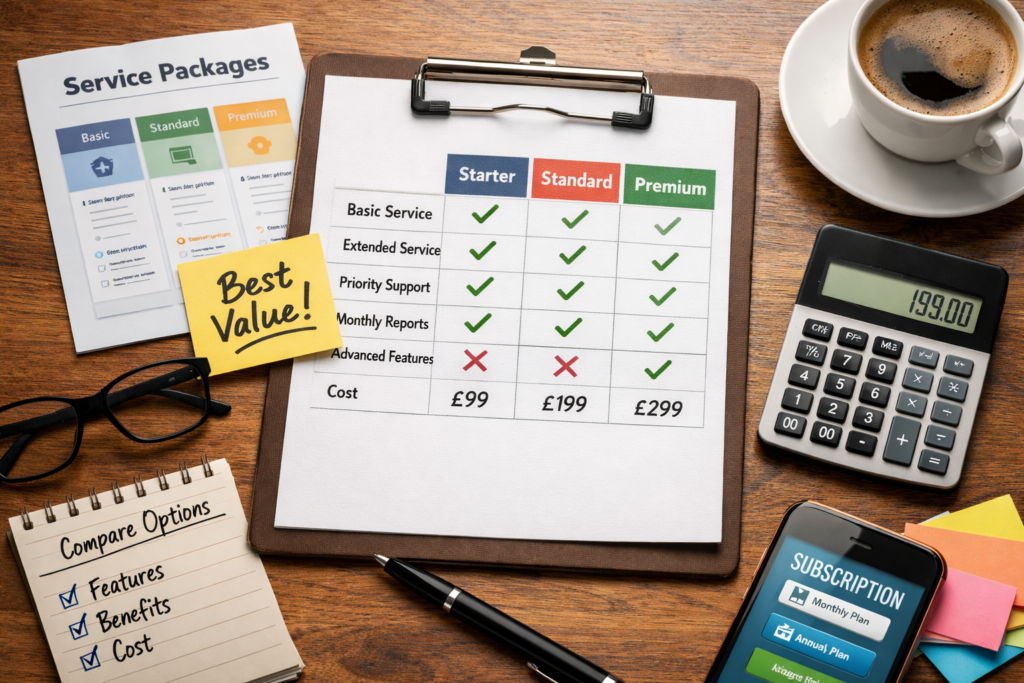
Service packages are bundled offerings where multiple services are grouped together with a clear set of deliverables and a fixed or structured price. They help businesses present their services in an organised way and make it easier for customers to compare options and understand what they will get for their money. Unlike pay‑as‑you‑go or purely hourly billing, service packages clarify scope and often offer better perceived value because they combine services that customers need in a coherent format.
What is a Service Package
A service package brings a group of related services together at a single price point. Businesses often design these packages to make their offerings easier to understand and to encourage customers to buy a bundle rather than a single service on its own. Packages can vary from simple prepaid bundles to tiered options that increase in features and support as the price rises.
Why Service Packages Deliver Value
Service packages benefit both customers and businesses. For customers, packages provide predictable pricing and a clear understanding of what is included in each option. They reduce the uncertainty that comes with hourly billing or ad‑hoc quotes. By presenting several options, businesses give customers control over how much they spend based on their needs. For businesses, packages can increase customer satisfaction and retention by aligning offerings with specific customer needs, and they can boost sales through upselling to higher‑value packages.
Key Advantages of Bundling Services
Bundling multiple services into packages can create value by making the total offering greater than the sum of individual parts. When services are combined thoughtfully, customers feel they are getting more for their money because the package often contains complementary elements that would be more expensive if purchased separately. This approach simplifies decision‑making for customers and can differentiate a business’s offerings from competitors.
Common Types of Service Packages
Tiered Packages
One of the most common structures for service packages is tiered pricing, often presented as basic, standard and premium levels. Each tier progressively adds more features, services or benefits at a higher price point. This format helps customers choose the option that best matches their budget and requirements. The mid‑level tier is often seen as best value because it combines essential features with a reasonable price.
Subscription‑Based Packages
Subscription packages allow customers to pay a regular recurring fee, typically monthly or annually, to access a suite of services. Subscription models are common in software, maintenance, coaching and membership‑style businesses. They provide predictable income for providers and convenience for customers who need ongoing support or services.
Prepaid Bundles
Some businesses sell packages where customers pay upfront for a number of services or sessions at a discounted rate. For example, a customer might buy multiple sessions of a service like massage or coaching at a lower total price than paying for each session individually. This encourages repeat business and can improve client loyalty.
Service Credits and Usage Blocks
In this model the customer purchases a block of credits that can be redeemed against services as needed. This gives flexibility because the customer can decide how and when they use the services, but still benefits from a structured, bundled purchase.
Goal‑Oriented Packages
These packages focus on delivering a specific outcome or milestone, such as a 90‑day business growth plan or a launch package. They are often priced based on the value of achieving a particular result rather than the hours required to complete tasks.
Understanding the “Best Value” Concept
Best value is not simply the lowest price. It refers to the amount of benefits or outcomes a customer receives relative to the cost. A best‑value package is one that achieves the desired results most efficiently or gives the greatest return on investment for the money spent. It is therefore important for customers to look beyond the price tag and focus on what they will actually receive, such as support levels, service deliverables, or long‑term benefits.
The reason tiered pricing often leads customers to choose the middle option is psychological. The most expensive tier can make the middle tier appear more reasonable and balanced in terms of cost and value, while the cheapest tier may miss features that some customers regard as essential. Presenting options this way helps customers self‑direct to what feels like the smartest choice.
How to Choose the Best‑Value Package
To determine which service package represents the best value, customers should first identify their own goals and priorities. It helps to compare what each package includes, how those deliverables align with needs, and whether the outcomes justify the price. A simple comparison table showing features against price can make differences clearer. Consider questions such as: does the package include support or services that matter most to you? Are there add‑ons that you would have to purchase separately?
Another useful approach is to think about long‑term benefits such as subscription discounts, included follow‑up support, or access to premium tools. Packages that may seem more expensive upfront can deliver better value over time if they reduce future costs or provide ongoing advantages.
Tips for Designing Packages That Sell
For businesses creating service packages, start by defining clear outcomes that customers care about. This means focusing on what problems the service solves rather than how many hours it takes. Clearly name and describe each package so customers instantly recognise the difference between them. Keeping the number of options sensible helps avoid overwhelm and makes comparison easier.
Feedback from customers is valuable when refining packages over time. If a tier is consistently overlooked, it may not be meeting actual needs or the price‑to‑value alignment may be off. A review process allows businesses to improve offerings based on real customer behaviour.
Common Mistakes to Avoid
Some businesses make the mistake of offering too many packages, which can confuse customers rather than help them decide. Others fail to define what is included in each package clearly, leading to dissatisfaction when customers feel they did not receive what they expected. Pricing packages too low can also unintentionally signal low quality, while pricing too high without a clear value narrative can deter customers.
Conclusion
Service packages give both customers and businesses a structured way to engage. Customers benefit from clarity and predictable pricing, while businesses can present their services in a way that highlights value and encourages purchase decisions. Understanding what makes a package good value requires a focus on outcomes and what the customer ultimately gains from spending their money. By comparing inclusions and aligning them with individual goals, customers can choose the most appropriate and cost‑effective option for their needs.