
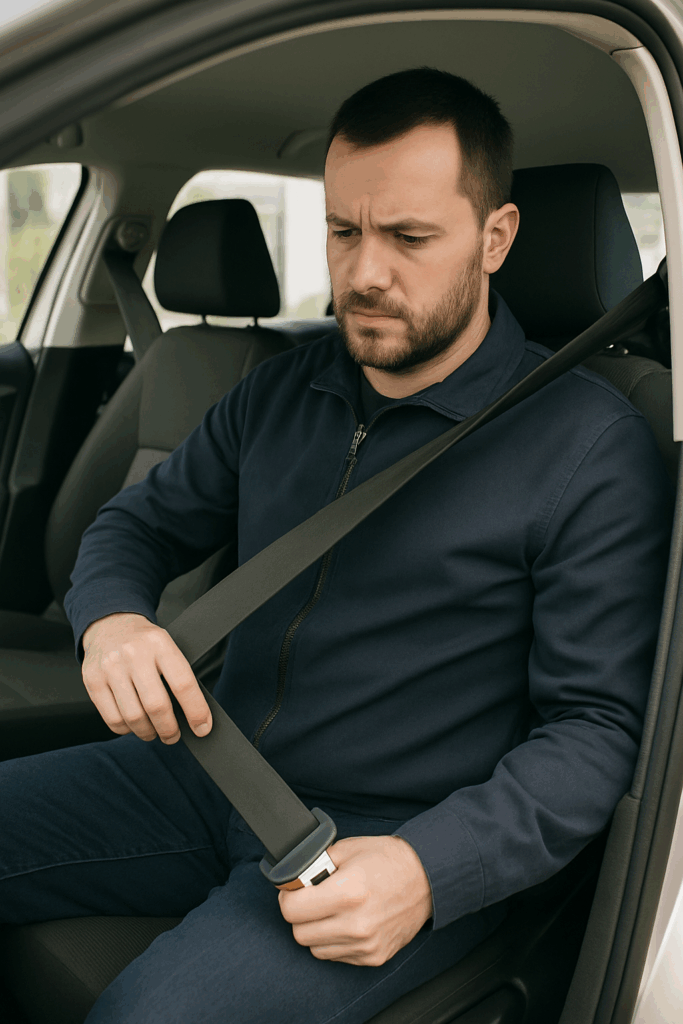
Seatbelts are one of the simplest yet most effective safety devices in vehicles. A few minutes of inspection could help your belts perform as they should, keep you and your passengers safer, and avoid unnecessary issues when your vehicle is being serviced or inspected. This article offers practical steps for UK drivers to check their seatbelts, adjust them correctly, spot common problems and know when to call in the professionals.
Why Seatbelt Safety Matters
Wearing a seatbelt is not optional in most cases – if your vehicle has seatbelts, you must use them. When used correctly they reduce the risk of serious injury or death in a crash. According to DfT guidance, a rear‑seat occupant without a belt colliding with the front seat at 30 mph could impact with a force 30–60 times their body weight.
Beyond safety, failing to wear or maintain seatbelts can lead to legal consequences. For example, drivers and passengers must belt up where fitted, and drivers are responsible for children under 14 being properly restrained.
Ensuring that your seatbelt system is in good working order means one less thing to worry about – whether at the MOT, a service or simply on your daily commute.
What the Law Says
In the UK it has been a legal requirement to wear a seatbelt if one is fitted: for front‑seat drivers and passengers since 1983, and for rear‑seat passengers since 1991.
Children under 12 years old, or under 135 cm in height, must use an approved child restraint unless specific exceptions apply. Once a child is 12 or taller than 135 cm, they may use an adult belt if fitted.
For adult passengers aged 14 and over the seatbelt must be used where provided; the responsibility shifts to the passenger themselves. For children under 14 the driver is responsible for ensuring proper restraint.
Maintaining correct installation, operation and condition of belts is also important if your vehicle is subject to an MOT‑type inspection. Inspectors check that belts operate correctly (for example, buckles and retractors) and that there is no obvious wear or damage.
Quick Visual & Physical Checks You Can Do
Here are simple checks you can perform in under five minutes before you ride. These help identify obvious faults before they become serious.
Inspect the webbing
Check each belt for frays, cuts, holes or worn edges. Even small damage can compromise strength and performance. Replace the belt if the webbing shows visible deterioration.
Check the buckle and stalk
Fasten the belt and give a firm pull. The buckle must click securely and hold. Release it and ensure the mechanism works reliably. The stalk (the metal part attached to the vehicle) should not be loose or damaged.
Test the retractor
With the seat unoccupied and the belt fastened, let the webbing retract fully. Pull the belt out quickly and sharply – the retractor should lock. Then allow it to retract smoothly with no hesitation. If the belt does not lock when pulled, or retracts slowly, this may indicate malfunction.
Ensure correct belt path and no obstructions
Make sure the belt is not twisted, caught behind seats, or hindered by covers, cushions or lumps in the seat. Simplify the belt path so it lies cleanly across the occupant.
Check fit for different occupants
The same belt may be used by different people – make sure it adjusts properly for each. The shoulder strap should lie across the chest and over the shoulder (not the neck) and the lap strap should sit low across the hips (not the stomach). For smaller occupants or children switching to the adult belt, make sure the belt anchor height and angle are correct.
Fitting & Adjustment Tips for Everyday Use
Correct positioning is vital if the belt is to do its job. Here are tips to help optimise the fit.
For adults, ensure the lap strap is as low as possible across the hip bones. Avoid the lap strap riding up onto the abdomen. The shoulder strap should cross the chest and rest midway across the shoulder rather than digging into the neck or falling off the shoulder.
For pregnant drivers or passengers, the belt should still be worn. It should pass across the chest and over the shoulder, and the lap belt should be positioned under the bump, low across the hips, not the stomach. Many manufacturers and safety bodies support this method as the safest for mother and child.
When it comes to children, if they are under 135 cm or under 12 years old they must use a suitable child restraint or booster seat. When the child reaches 12 or is over 135 cm tall, they may use the adult seatbelt – but the belt must still fit properly. Ensure the shoulder strap is not behind the back or under the arm, and the lap strap remains low on the hips.
If your car is fitted with a height‑adjustable top anchor for the shoulder belt, position it based on the occupant’s height. A well‑fitted belt should make contact at or just below the shoulder height, not above it.
Avoid using extra padding, cushions or aftermarket devices under the belt unless recommended by the vehicle manufacturer. These may alter the way the belt behaves in a crash.
Common Pitfalls and How to Avoid Them
Even the best‑intentioned drivers may overlook certain issues. Here are some of the more frequent faults and what you can do:
Twisted belts: A twisted belt may not distribute crash forces evenly. Untwist the belt and ensure it lies flat across the body.
Webbing worn through previous impact: If the vehicle has been in a crash, even if no damage is apparent, the belt may have been stressed and should be replaced.
Slow retraction or failure to lock: If the retractor mechanism is slow, does not lock correctly when pulled sharply, or has visible damage, it may fail in a collision.
Incorrect fit for occupant: Using a belt meant for an adult on a smaller occupant without adjustment, or using a lap belt only when a diagonal belt is fitted, can diminish protection.
Over‑loading vehicles: Carrying more passengers than there are belts or allowing children to travel without suitable restraint reduces everyone’s safety and may invalidate insurance cover.
Seatbelts fitted incorrectly: Particularly in vehicles modified for extra seats or seatbelts (for example minibuses) the belts may not meet legal installation standards or may not have been installed with approval. In such cases special installation checks may be required.
When to Get Professional Help
If any of your checks above flags up a problem (for example damaged webbing, faulty buckle, slow retractor or a seatbelt installed after a crash) then it is wise to call a professional. At Windmill Garage we can inspect belt installations, retractors, anchorages, check child‑restraint compatibility and replace units when necessary.
If your vehicle is due for an MOT or service, and the belts show signs of wear, schedule the check now. Some inspection manuals require that belts are examined for wear and correct operation. If you have modified your seating or added extra belts or seats the installation may need special approval and testing.
Easy Pass Maintenance Checklist
Here is a quick checklist you can keep in your glove box or download from our website:
- Webbing intact (no cuts, frays or holes)
- Buckle clicks securely and release mechanism works
- Retractor locks when belt pulled sharply and retracts smoothly
- Belt path clear: no twists, seat covers or obstructions
- Correct fit: lap strap low across hips, shoulder strap across chest
- Adjuster/height anchor correct for each occupant
- Child restraint or booster used if required (child under 12 yrs or under 135 cm)
- After accident: belt replaced or inspected for damage
Make it a habit to run through this checklist monthly and always when you carry new passengers or switch child seating arrangements.
Conclusion
Taking a few moments to check and adjust your seatbelts can make a real difference to your safety on the road. A well‑maintained system means fewer worries when your car is serviced or MOT‑tested, and more importantly better protection for everyone inside. At Windmill Garage we’re here to help you with professional inspections, adjustments and replacements when required. Safe journeys to you and your passengers.