
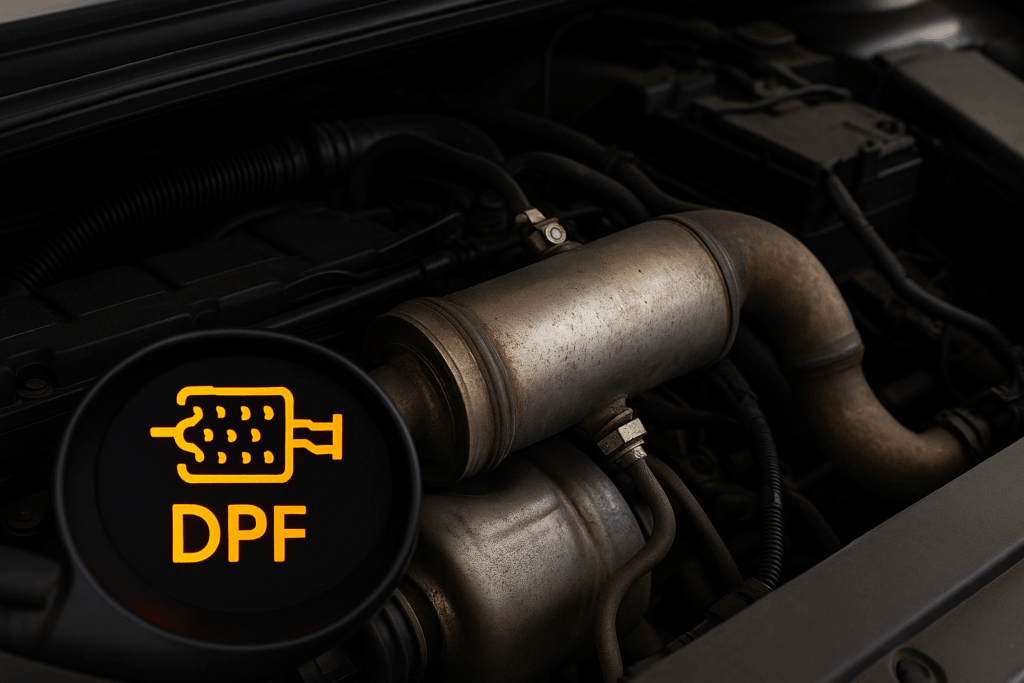
If you drive a diesel vehicle in the UK, you’ve likely come across the term diesel particulate filter, or DPF. This critical component helps reduce harmful emissions and plays a major role in determining whether your car passes or fails its MOT. In this article, we’ll walk through what the DPF does, what causes it to clog, how to prevent those issues, and what to do if problems arise.
What is a DPF and why is it important?
The diesel particulate filter is a device fitted to most modern diesel engines. Its job is to trap tiny particles of soot produced during fuel combustion before they leave the exhaust. These particles are stored in the filter and then periodically burned off in a process called regeneration. This helps keep emissions low and protects the environment.
If the DPF becomes damaged, clogged, or has been removed entirely, it can lead to immediate MOT failure. It can also reduce performance, increase fuel consumption and cause engine warning lights to come on. Keeping your DPF in working order is essential for staying compliant and keeping your car on the road.
What causes DPF blockages and high emissions?
There are several driving and maintenance habits that can contribute to a clogged DPF:
- Short trips and stop-start driving: These prevent the engine from reaching the temperature needed for the DPF to regenerate. Without regeneration, soot continues to build up in the filter.
- Urban driving only: Frequent low-speed journeys in towns or cities don’t allow the DPF to perform passive regeneration, where heat from regular driving clears out the trapped particles.
- Using the wrong oil: Many modern diesels require low-ash engine oil. Using standard oils can increase the residue left in the DPF and speed up clogging.
- Poor fuel quality: Low-grade or contaminated diesel can increase the amount of soot produced, accelerating DPF build-up.
- Cold weather: Engines take longer to warm up in winter, especially if trips are short. This can prevent the DPF from reaching the required temperature to clear itself.
- Ignoring dashboard warnings: If the DPF light comes on, it means the filter is at risk of clogging. Ignoring it allows the problem to escalate.
- Tampering or removal: Removing the DPF might seem like a way to avoid issues, but it’s illegal and results in an MOT fail, along with potential fines.
How to prevent DPF clogs and reduce emissions
Looking after your DPF doesn’t need to be complicated. These straightforward habits can go a long way:
- Take your car for a proper run: Driving at sustained speeds on a dual carriageway or motorway for 20 to 50 minutes allows the DPF to reach the temperature needed for regeneration.
- Stick to your service schedule: Regular servicing keeps the fuel, air and oil systems working efficiently. Ensure your mechanic uses the correct low-ash oil specified for your vehicle.
- Choose quality fuel: Fill up with reputable diesel to minimise soot and contaminants.
- Respond to warning lights: If the DPF warning light appears, don’t ignore it. Take your car on a long drive or get it checked by a garage if the light doesn’t go out.
- Don’t tamper with the system: Avoid any form of DPF bypass or removal. It might create short-term performance gains, but it brings legal trouble and MOT failure.
- Prepare before your MOT: Before your test, take your car on a longer drive to help reduce visible smoke and give the DPF a chance to regenerate. Make sure no engine warning lights are showing.
What to do if your DPF is blocked
Even with good habits, problems can still occur. Common signs of a clogged DPF include reduced engine power, increased fuel usage, smoke from the exhaust, or your car going into limp mode. Here’s what to do:
- Visit a qualified garage: A diagnostic check can confirm whether the DPF is the issue and whether regeneration is possible.
- Forced regeneration: If normal driving hasn’t worked, a mechanic can trigger a forced regeneration to clear the filter.
- Cleaning or replacement: If regeneration fails or the filter is too damaged, cleaning or replacement might be needed. Cleaning can be a more cost-effective option if caught early.
- Fix the root cause: DPF issues can be symptoms of deeper problems, such as faulty injectors, EGR valves or sensors. Make sure any underlying faults are fixed to prevent the issue recurring.
- Never ignore it: A severely clogged DPF can cause engine damage and become a very costly fix. It can also lead to MOT failure and potential legal penalties if the system has been modified or removed.
Conclusion
The DPF plays a critical role in reducing diesel emissions and helping your vehicle meet legal standards. With a little planning and attention, you can keep your DPF in good working order, reduce emissions and avoid MOT troubles. Long drives, the right oil and fuel, and timely servicing are your best defences. If you notice warning signs, act quickly to avoid major costs.
By taking care of your DPF, you not only protect your engine and bank balance, but also do your part in reducing pollution. So before your next MOT, give your diesel engine the attention it deserves and make sure your DPF is clean, compliant and working just as it should.