
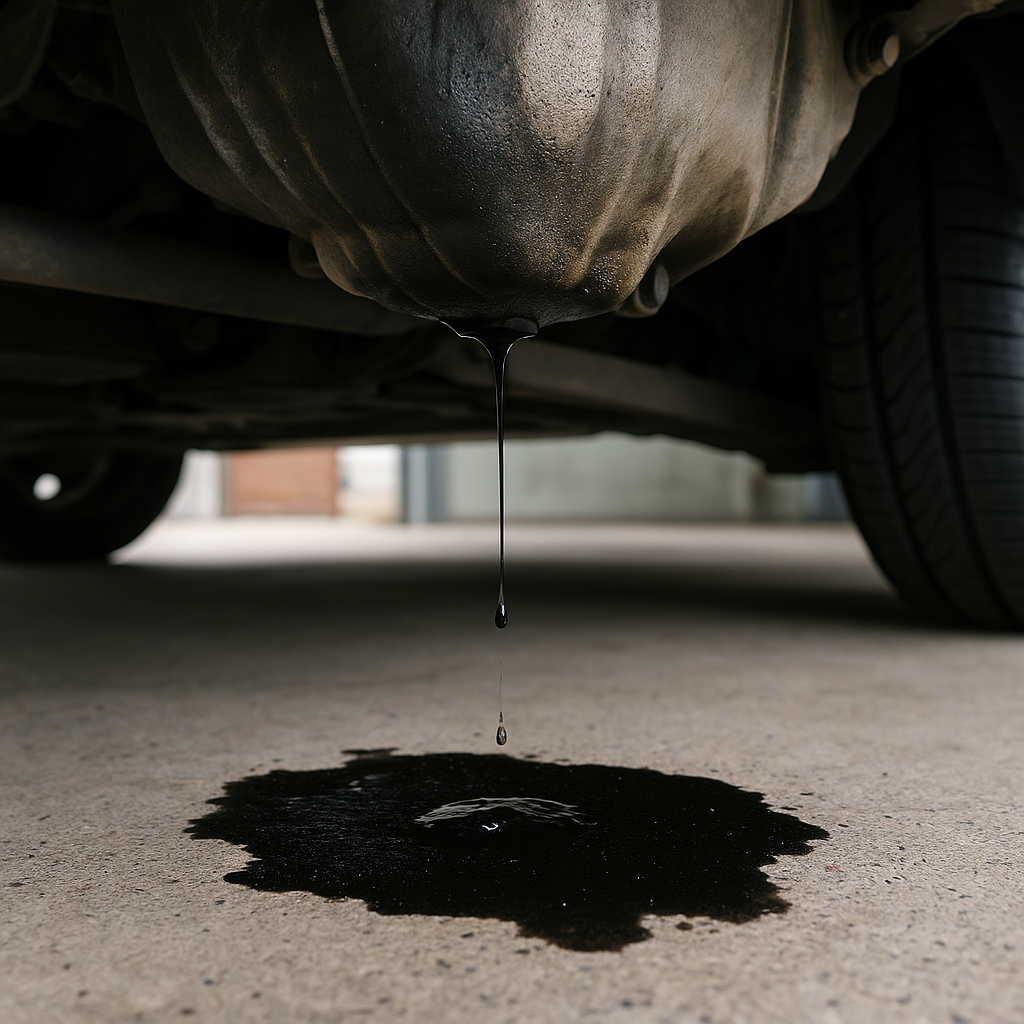
As you prepare for your upcoming MOT, one frequent worry is whether that oil stain under your car will mean an automatic fail. The truth is, while an oil leak can cause your vehicle to fail the MOT, it does not mean every leak leads to failure. What matters is the severity, location and risk posed by the leak.
What the MOT test covers when it comes to fluid leaks
During an MOT, the inspector checks under the vehicle while the engine is idling and looks for fluid leaks that could endanger road safety or harm the environment. Here’s the key rule:
- If a fluid leak creates a pool on the ground within 5 minutes of idling that is more than 75 mm in diameter, the vehicle must be failed.
- If the leak is continuous and likely to pose a serious safety risk – for example, oil dripping onto hot components or brakes – it may be classified as a dangerous defect, which means a fail and you may not be allowed to drive the car away.
- Minor seepages or weeping that do not form a puddle and do not pose immediate risk may result only in an advisory rather than an outright fail.
The rules apply to fluid leaks such as engine oil, gearbox oil, transmission fluid and power steering fluid. Some fluids, such as screen-wash or AdBlue, are excluded from failure criteria.
When an oil leak will result in a fail
You’ll likely face an MOT fail under these circumstances:
- A visible puddle forming on the ground within 5 minutes while idling, more than 75 mm across. That indicates a leak of significant volume or speed.
- Active dripping of oil that is landing on the road surface or underside components in a way that threatens safety or causes environmental contamination. For example, oil dripping onto a hot exhaust or brakes could lead to fire risk or loss of control.
When you might pass or only receive an advisory
Not every oil leak means you’ll fail your MOT. Some examples where you may still pass (though often with an advisory) include:
- Very slow seepage or traces of oil residue without active drips or pooling. Many vehicles, especially older ones, may show signs of weeping seals or aged gaskets that aren’t actively dripping.
- A small spot under the vehicle that is clearly old or crusted with oil, rather than fresh, active leakage. In such cases the inspector may record an advisory to keep an eye on the leak, rather than a major defect.
- If the leak is from a component with low risk – though “low risk” is relative, and the inspector retains judgement.
That said, even slow leaks can become failable if the tester judges that they could worsen or pose a hazard.
Why an oil leak is more than just an MOT concern
- Environmental and safety impact: Oil on the road or in drain systems can damage the environment. Oil dripping onto hot parts or brakes may present serious risk.
- Mechanical consequences: Persistent oil leaks mean lower lubricant levels, which can accelerate engine or gearbox wear, reduce reliability, and increase repair bills.
- For owners and garages: A failed MOT means extra time, cost and inconvenience. By identifying a leak early and addressing it before the test, you save on retests and downtime.
Pre-MOT check: What you can do ahead of the test
To give your vehicle the best chance of passing the MOT, you can carry out a few simple checks:
- Park the car on a clean, dry surface for a short period with the engine idling and check underneath for fresh spots or new puddles.
- Use a piece of white cardboard beneath where you suspect a leak to detect fresh drips.
- Check the engine oil level via the dipstick and monitor whether the level is dropping steadily – sudden drops may suggest a leak.
- Look around common leak points: engine sump plug and washer, oil filter housing, valve cover gasket, rear main seal, gearbox output shaft.
- Clean the engine bay or underside lightly – a very oily engine bay can mask fresh leaks and may be viewed unfavourably by the tester. Some vehicle owners have found that merely cleaning the area and showing there is no new drip helps.
- If you suspect a leak and cannot trace the source, book in with a trusted garage for a pre-MOT inspection so the cause can be identified and remedied ahead of the test.
If your vehicle fails due to an oil leak
What should you expect if the MOT results in a fail because of an oil leak?
- If failed under “major defect” rules, you’ll be issued a VT30 failure certificate and you must get the leak repaired before the MOT can be passed.
- If the fault is categorised as a “dangerous defect”, the vehicle may be prohibited from being driven until the fault is addressed and may require an urgent repair.
- After repair, you’ll need a retest. If done within a stipulated period, a partial retest might be free or cheaper.
- Repairing the leak, however modest, is usually far cheaper and simpler than dealing with the consequences of repeated failure, further engine damage or failed insurance claims if a leak causes a hazard.
Frequently asked questions
Will a tiny oil drip automatically mean I fail?
No. If the drip is minimal, not forming a puddle and not deemed a risk, the MOT may pass with an advisory. But it is still something you should address.
My car passed previous MOTs despite a known leak – why might it fail now?
The testing guidelines and their enforcement may vary over time and by tester. The official rule exists, but the tester’s judgement plays a part when a leak is judged to be excessive or continuous.
Does gearbox oil leaking count the same as engine oil?
Yes. Any fluid considered part of the vehicle’s lubrication or drive systems can be judged under the same rules if leaking at a significant rate. The key is whether it pools or poses risk.
Can I just wipe the leak before the test?
Cleaning up oil residue may help visibility, but it does not replace fixing the underlying cause. Also, if the tester sees fresh evidence of oil drip or an attempt to mask a leak, that might count against you. It is far better to repair the leak than try to hide it.
My car is older and has slight seepage – should I worry?
Yes and no. Slight seepage may not cause a failure now but could worsen. From a maintenance point of view, fixing it early is advised. From an MOT perspective, it may pass now but could still be flagged as an advisory.
Conclusion
In short: an oil leak does not automatically mean a fail at MOT, but one that is active, pooling or judged to create a hazard almost certainly will. The key measure to watch is whether fluid is forming a pool more than 75 mm in diameter within five minutes while idling. By checking your vehicle ahead of the test, cleaning visible leaks and attending to any decent seepage promptly, you give your car the best chance of passing first time. If you are unsure about a leak, book a pre-MOT inspection at your trusted local garage – it’s often much cheaper and less stressful than dealing with a failed test.