
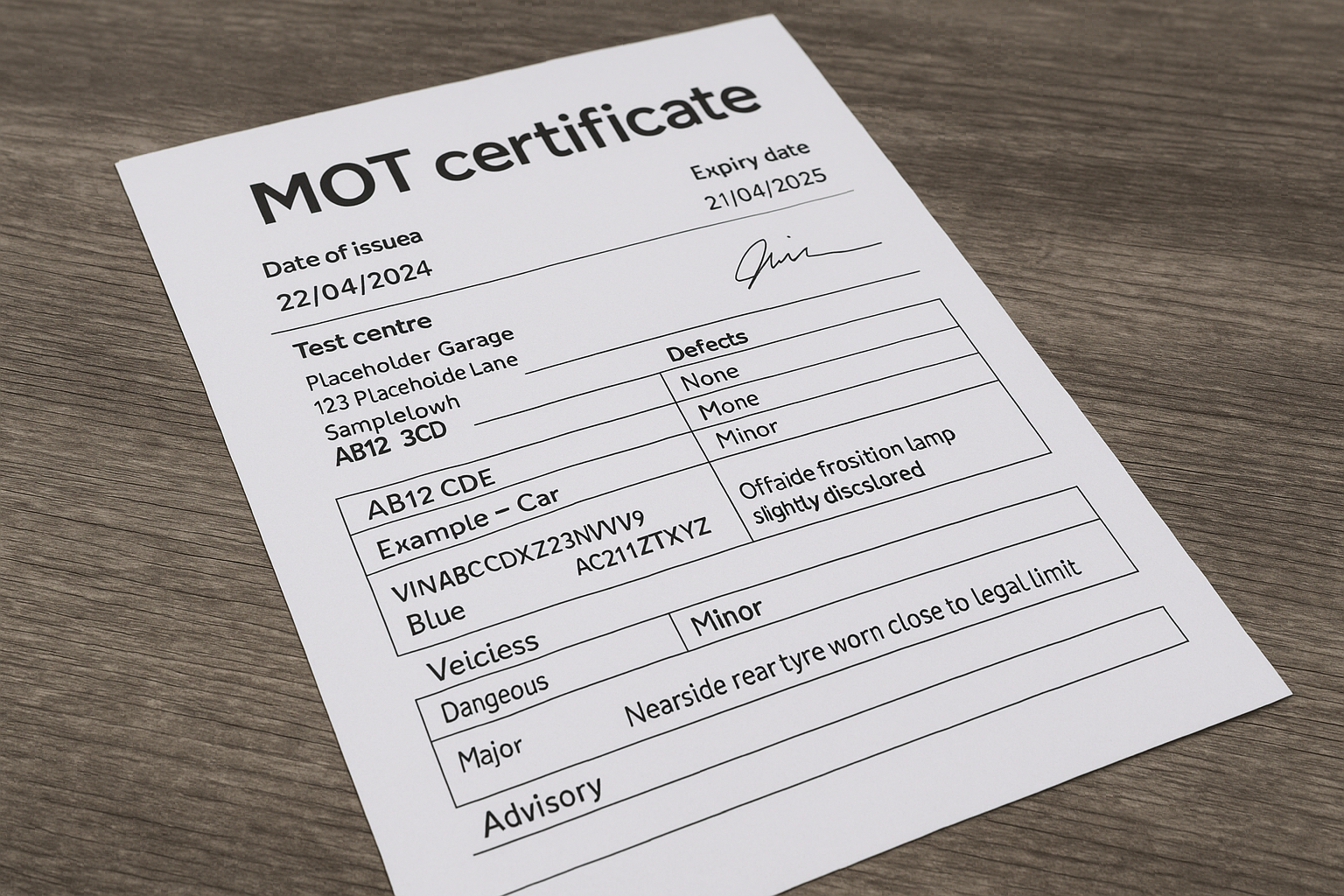
Understanding your MOT certificate in full can seem complicated, but every section has a purpose. Knowing what each part means allows you to see not only whether your vehicle is legal to drive but also what issues may need attention. Here is a breakdown of what to expect and what each section covers.
What an MOT Certificate Is & Its Validity
An MOT certificate is a legal document issued when a vehicle passes its annual MOT test. The certificate confirms that at the time of the test, the vehicle met the minimum acceptable environmental and road safety standards required by law. It does not guarantee the vehicle will remain roadworthy for the entire period until its next MOT. Regular maintenance remains the owner’s responsibility.
Vehicles in Great Britain normally require the first MOT test when they are three years old, and then yearly after that. In Northern Ireland the timing is slightly different. The certificate is valid for up to 12 months (minus one day) from the date of issue.
Top Section: Identity, Test & Vehicle Details
At the very top of the certificate you will find:
• Date of issue or test date – this is the day when the MOT was carried out
• Expiry date – this is the date when the certificate ceases to be valid
• Test centre information – name, address, and unique identifier
• Tester signature or authority details
• Vehicle identity – registration number, make and model, colour, vehicle category, and often the VIN (Vehicle Identification Number)
These details help ensure the certificate corresponds to your vehicle and allows others to verify its legitimacy.
Defect Categories: Dangerous, Major, Minor, and Advisories
Since May 2018, defects on MOT certificates have been categorised into three main types: dangerous, major and minor. There is also an advisory section.
• Dangerous defects are serious issues that pose an immediate risk to safety or have a serious impact on the environment. A vehicle with a dangerous fault cannot legally be driven until it is repaired. The certificate will state that the vehicle has failed.
• Major defects are also serious. They may affect vehicle safety, put other road users at risk, or have environmental consequences. A major defect also results in an MOT failure and requires repair before a retest.
• Minor defects are less serious faults. They do not cause a fail, but the tester will record them and you are advised to repair them promptly.
• Advisories are even less serious. These are comments about parts or potential issues that are not yet faulty enough to count as minor defects. However, they could become problems if neglected. The certificate may list advisories so that you know what to monitor.
Other Key Sections
After the defect section, the certificate may also include:
• Emissions or Environmental Information – this shows results or notes about exhaust emissions or environmental compliance
• Mileage Records – this is the odometer reading at the time of test, and sometimes past readings are also shown
• Notes or Advisory Section – these are small defects or issues that are not serious enough to cause a fail but may require attention
• Vehicle Category – this shows what class the vehicle falls into (such as car or van), which affects the test items that apply
What To Do After You Get Your Certificate
If your vehicle passes cleanly, you should keep the certificate safely. It may be required for insurance, resale, or proof of roadworthiness. If the certificate shows minor defects or advisories, plan for repairs so that small issues do not worsen. If it fails because of a major or dangerous defect, arrange for the required repairs before a retest. Driving a vehicle with dangerous defects or after the MOT expires can lead to penalties, invalid insurance, or legal trouble.
You can check MOT history online via official government services. This allows you to see past defects, mileage readings, and previous test results. It is especially helpful when you are buying a used vehicle or monitoring recurring issues.
Common Misconceptions & Frequently Asked Questions
Many people assume that a pass means the car is perfect. In reality, it only confirms the vehicle met minimum legal standards on the day of the test. A vehicle’s condition can still deteriorate after the test.
Another common belief is that advisories are unimportant. While they do not cause a fail, ignoring them could lead to more serious faults over time.
Some drivers think a vehicle can be driven even with dangerous defects as long as they have the certificate. That is not true. Dangerous defects must be repaired before the vehicle is driven again.
Conclusion: Key Takeaways
An MOT certificate is more than just a pass or fail slip. Each section of the certificate – from test dates and vehicle identity to defect categories and advisory notes – provides useful information about the current condition of your car. Understanding what each part means helps you take the right actions, maintain safety, avoid legal issues, and plan ahead. Whenever you receive your MOT certificate, take a moment to read it carefully, note any advisories, and follow up with the necessary steps to keep your vehicle in top condition.