
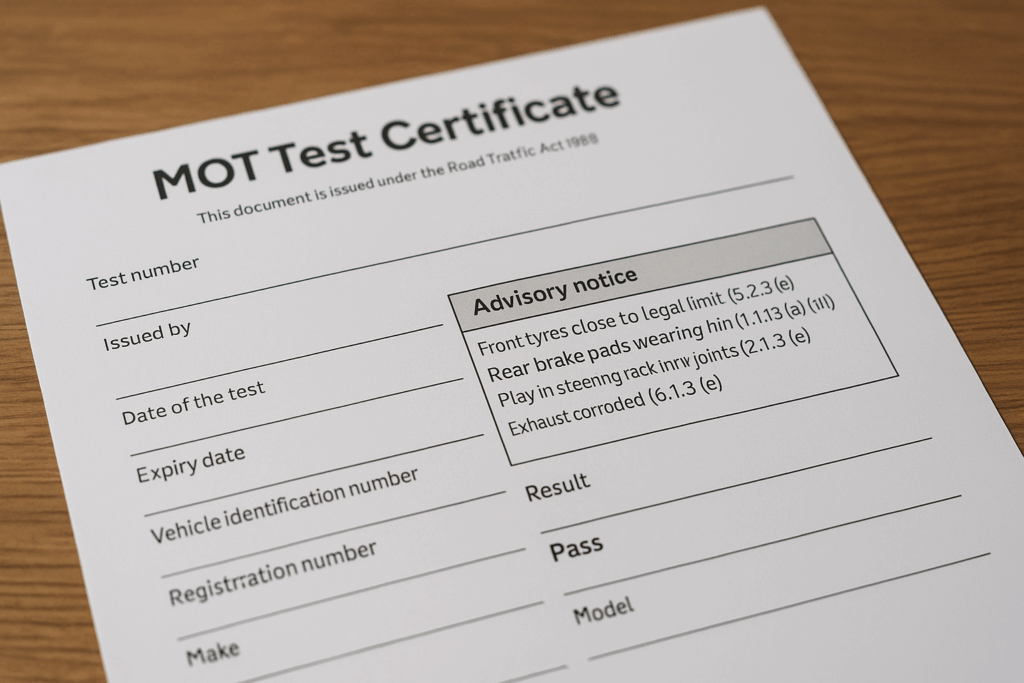
If you have ever received an MOT test certificate you may have noticed a section called “advisory notes”. Many drivers glance at them quickly and then forget about them. However, understanding MOT advisories properly can help you save money, avoid breakdowns, and even prevent future MOT failures.
This article explains what advisory notes are, why they matter, and how to use them to reduce your long-term motoring costs.
What Are MOT Advisory Notes
Advisory notes are warnings written by MOT testers. They highlight issues that are not serious enough to fail your MOT but could develop into bigger problems if left unchecked.
For example, you might pass your MOT but be told that your tyres are “close to the legal limit”, that your brake pads are “worn”, or that there is “slight play in a suspension joint”. These are advisories.
They are essentially a heads-up. The tester is saying: “This is fine for now, but you should keep an eye on it.”
Why MOT Advisories Matter
Many drivers ignore advisories because they are not mandatory repairs. However, this can be a costly mistake. Advisory items often turn into MOT failures at the next test or even sooner. By acting early, you can:
- Spread the cost of repairs across the year instead of facing a large bill all at once
- Avoid roadside breakdowns caused by worn components
- Prevent additional damage caused when a minor fault worsens
- Increase your car’s resale value by keeping on top of maintenance records
In short, advisories are a way to plan ahead and save money rather than being caught out by sudden expenses.
Common Types of MOT Advisories
Some advisories appear more often than others. These include:
- Tyres close to the legal tread limit: The UK minimum tread depth is 1.6mm, but many testers issue advisories when tyres are at 2–3mm. Changing them early can improve safety and fuel economy.
- Brake pads and discs worn: If you wait too long, you may need to replace discs as well as pads, doubling the cost.
- Suspension joints or bushes with slight play: These are relatively cheap if replaced promptly, but if left, they can lead to dangerous handling and more expensive repairs.
- Exhaust corrosion: Surface rust may not be urgent, but catching it before it worsens can prevent a full exhaust replacement.
- Minor fluid leaks: Small oil or coolant leaks can escalate into major engine damage if ignored.
How Advisory Notes Can Save You Money
Advisories are not just warnings, they are opportunities to reduce your motoring bills. Here is how to use them wisely:
- Plan repairs in advance: If you know a part is wearing out, you can budget for it or shop around for the best price before it becomes urgent.
- Avoid premium “panic” prices: Emergency repairs often cost more because you cannot choose when and where they happen. Acting on advisories gives you flexibility.
- Schedule repairs together: If your MOT notes highlight several upcoming issues, you can combine them in one garage visit, saving on labour costs.
- Improve efficiency: Fixing worn tyres, brakes or suspension can improve fuel economy and reduce wear on other parts.
- Maintain resale value: A well-maintained car with no outstanding advisories is more attractive to buyers and dealers.
What To Do When You Receive Advisories
When you collect your MOT certificate, always check the advisory section. Then:
- Read the notes carefully. Understand what each item means.
- Ask your mechanic for details. They can show you the worn parts or explain the urgency.
- Prioritise safety items first. Tyres, brakes and suspension affect your safety most.
- Get quotes. Do not feel pressured to fix everything immediately at the MOT garage. Shop around.
- Keep records. Save the advisory notes and receipts. They form part of your car’s service history.
Alternatives to Ignoring Advisories
The alternative to acting on advisories is usually waiting until the part fails or causes your next MOT to fail. This nearly always costs more.
For example:
- Replacing worn pads promptly may cost £150. Waiting until they damage the discs could cost £400 or more.
- Replacing tyres at 2mm may cost the same as replacing them at 1.6mm, but you benefit from better grip and avoid the risk of fines for illegal tyres.
- Fixing a small oil leak early could be £100–200. Waiting until it causes engine damage might mean a bill in the thousands.
Example Scenario
Imagine your MOT certificate lists the advisory “nearside front tyre worn close to the legal limit”. You could ignore it and hope the tyre lasts until the next MOT. However, a sudden blowout or a stop by the police could cost you points on your licence and a fine of up to £2,500 per tyre.
Instead, by changing the tyre in the next month or two, you control the cost, improve safety, and avoid future problems.
Conclusion and Next Steps
MOT advisory notes are not just filler on your test certificate. They are valuable warnings that can help you budget, plan and save money on car repairs.
To get the most out of them:
- Always read your advisories carefully
- Plan repairs before they become urgent
- Prioritise safety items such as tyres and brakes
- Keep clear records for your service history
By treating advisory notes as early alerts rather than optional extras, you will spend less on motoring in the long run, keep your car safer, and enjoy greater peace of mind on the road.