
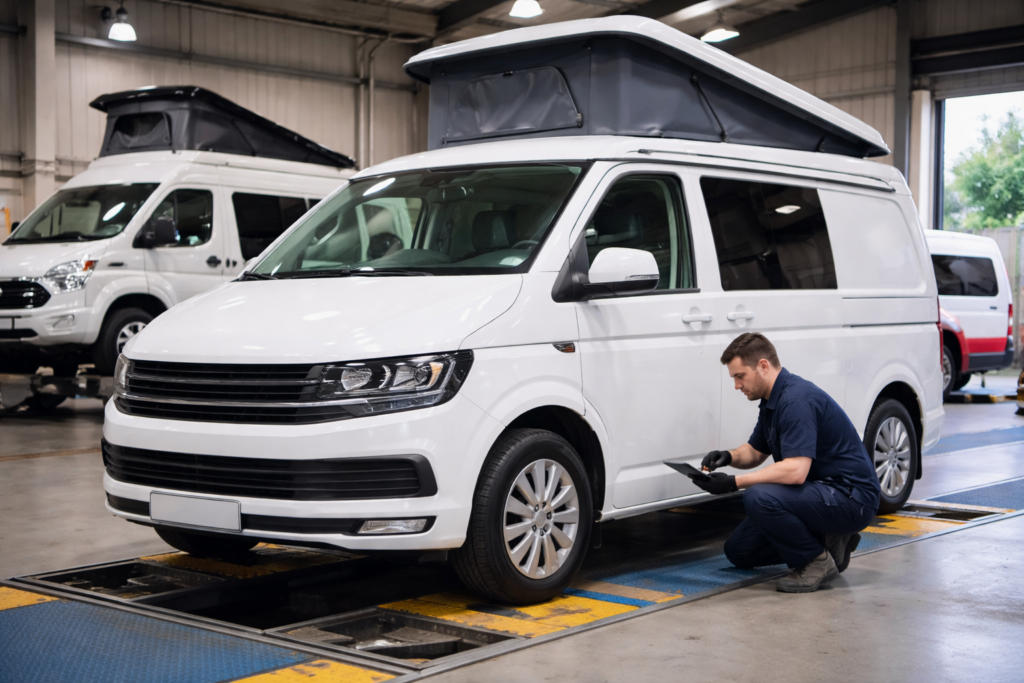
Owning a campervan in the United Kingdom brings a sense of freedom, flexibility and opportunity for adventure. Whether you use your campervan for weekend getaways or extended trips across the country, it is essential to keep it road‑legal. One of the most important legal requirements for campervan owners is ensuring the vehicle has a valid MOT certificate once it becomes due. In this article we explain the rules around campervan MOTs in the UK, what you need to know to stay compliant, and practical guidance to help you pass your test.
What Is an MOT Test?
An MOT test is an annual inspection that checks the roadworthiness and environmental standards of most vehicles in the UK. It is named after the old Ministry of Transport but is now administered by the Driver and Vehicle Standards Agency. The purpose of the test is to ensure that vehicles meet safety and emissions standards before they are used on public roads. If a vehicle fails to meet those standards, it cannot legally be driven, parked or used on any public road without a valid and current MOT certificate. There are a range of items checked during the test, including lights, brakes, tyres, suspension, emissions and structural integrity. MOT tests do not cover habitation fittings such as cooking or sleeping facilities inside the campervan, and additional checks may be advisable for those systems to ensure safety for occupants.
MOTs help protect not only the vehicle occupant but everyone else on the road by ensuring that vehicles meet minimum safety criteria for use. MOT certificates are issued once a vehicle passes all required checks, and the certificate remains valid for one year.
When Does a Campervan Need an MOT?
In the UK, most vehicles must have an MOT from the third anniversary of their first registration. This requirement applies equally to campervans and motorhomes, regardless of whether they are factory‑built or converted from another vehicle type. Once a campervan reaches the age of three years, it must pass an MOT annually to remain road‑legal. This annual requirement continues for as long as the vehicle is in use on public roads.
Even if your campervan is not driven often, or remains parked on a public road, it still requires a valid MOT if it is over three years old. Driving, keeping or parking a vehicle without a current MOT can lead to fines and invalidation of insurance policies. There are exemptions in rare cases, such as some historic vehicles over 40 years old. However, such exemptions are specific and depend on factors such as age and whether significant modifications have been made. Many campervans will not qualify for historic vehicle exemptions, so expecting to avoid an MOT based on age alone is not reliable.
MOT Class and What Applies to Campervans
The class of MOT a vehicle needs depends on its type and weight. Many campervans and motorhomes in the UK are tested under Class 4, which covers cars and passenger carrying vehicles up to a certain weight. When a campervan is under about 3,500 kilograms maximum authorised mass, it is typically tested as a Class 4 vehicle at most MOT testing centres.
Some larger campervans and heavier conversions may fall under different classes, such as Class 7 for light goods vehicles between roughly 3,000 kg and 3,500 kg, or even HGV testing for vehicles exceeding 3,500 kg. These test categories are distinguished by vehicle weight and classification on the V5C registration document. If in doubt about your vehicle’s classification or the class of MOT required, check the details on your vehicle logbook or consult your MOT testing centre.
Converting a van into a campervan does not exempt it from MOT requirements. A converted campervan remains subject to the same annual MOT rules as any other vehicle. How the vehicle is used or what fixtures it contains inside does not change the legal requirement for annual safety and emissions testing once it is over three years old.
What an MOT Test Checks
An MOT inspection covers many aspects of vehicle safety and emissions control. Key components that are examined during the test include:
• Lights and electrical systems such as indicators and brake lights
• Brakes and suspension performance
• Tyres for tread depth and condition
• Steering integrity and power assist
• Exhaust emissions and noise levels
• Windscreen, wipers and washer function
• Seatbelts, seats and anchorages
• Bodywork and structural condition affecting safety
• Mirrors, horn and registration plates
These checks focus on the vehicle’s mechanical safety on the road rather than the internal living facilities of the campervan. While the test does not look at habitation systems such as gas or electrical installations inside the living area, ensuring those are safe remains the responsibility of the owner and may be covered through separate checks or service inspections.
Preparing Your Campervan for an MOT
Preparing your campervan ahead of its MOT can significantly increase the chances of passing first time. Carry out simple checks yourself before taking your vehicle for its test. Confirm that all lights and indicators are working properly and that bulbs are free of damage. Examine tyres for even tread wear and a legal tread depth. Look for cracks in windscreen glass and make sure wipers are in good condition. Check that mirrors are secure and not cracked, and that seatbelts are functioning correctly.
Booking your MOT early and outside high‑demand peak months can help secure a convenient slot. If your campervan fails the MOT, the report will list items that need attention. Arrange for repairs to be completed and re‑tested promptly to regain a valid certificate.
Penalties for No MOT
Driving or using a campervan without a valid MOT certificate once it is due is against UK law. If caught without a current MOT, drivers can face fines and points on their licence. In addition, insurance cover may be invalidated in the event of a claim if the vehicle did not have a valid MOT at the time of an incident. Keeping up to date with MOT requirements helps avoid legal trouble and ensures your vehicle remains safe for you and others on the road.
Special Considerations for Conversions
For many owners, converting a van into a campervan is part of the appeal. When you convert a van, you may choose to register it as a motor caravan with the DVLA by meeting certain criteria for living space features. However, this classification relates to how the vehicle appears on its registration document and does not change its requirement for an MOT. A campervan that is converted and reclassified still needs annual MOT testing once it is over three years old.
When converting, pay attention to how fixtures are installed to avoid compromising safety at MOT inspections. Seatbelts, for instance, need to be properly fitted and secure. While habitation areas are not part of the MOT inspection itself, ensuring that conversion work does not affect vehicle safety components remains important.
Conclusion
Staying road‑legal with your campervan means understanding and meeting the UK’s MOT rules. If your campervan is over three years old and used or parked on public roads, it must have a valid annual MOT certificate. Knowing when the MOT is due, what class of test applies, and how to prepare your vehicle can help you avoid fines and ensure a safer campervan experience. Always factor in time for repairs if needed and consider complementary checks for living systems inside your campervan to keep vehicle and occupants safe. Regular attention to these legal requirements lets you enjoy your journeys with peace of mind.