
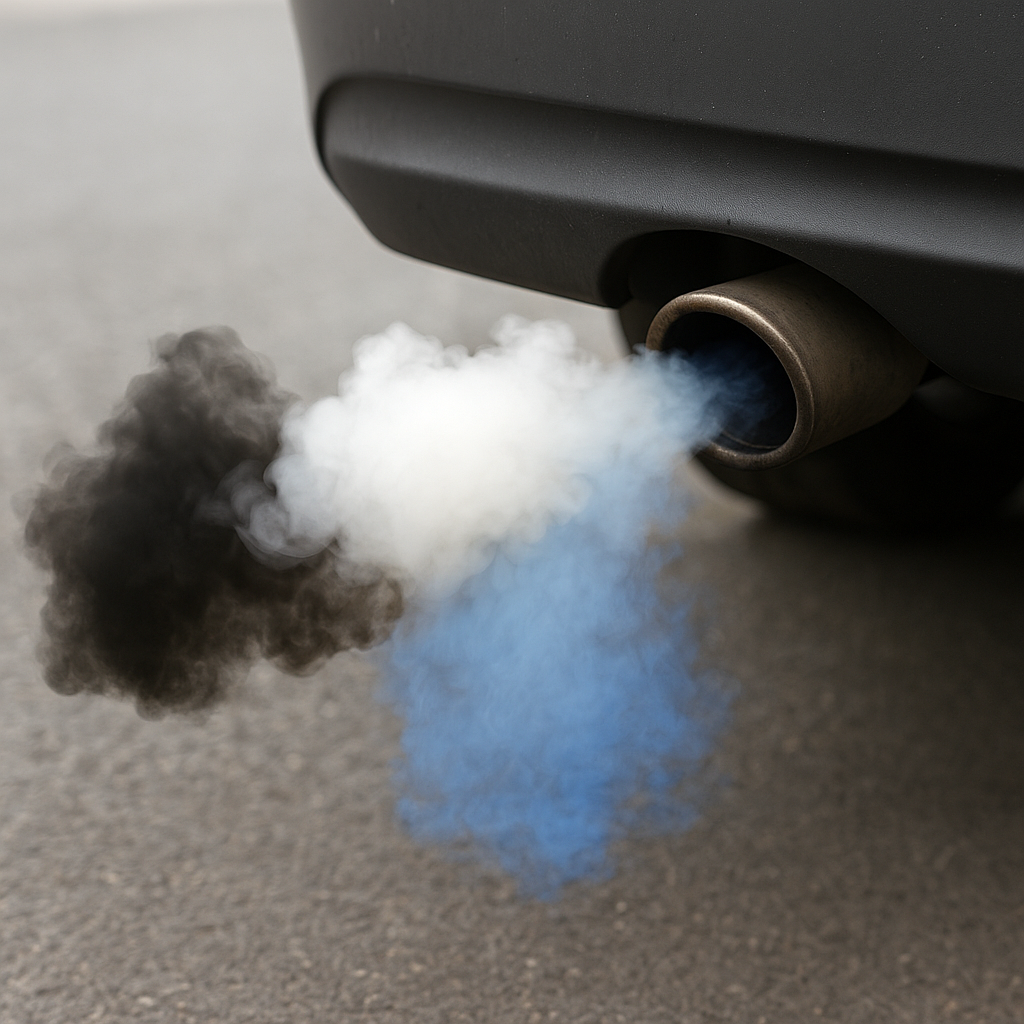
Exhaust Emissions Fixes – Cut Smoke Fast
Spotting smoke coming from your car’s tail‑pipe can be worrying. It is a warning sign that something is not quite right. This guide explains what the different colours of smoke mean, gives you practical checks you can do, and tells you when it’s time to bring your vehicle in to us at Windmill Garage.
Recognising the Smoke
When you see smoke from your exhaust, the first things to note are its colour, when it appears (for example at idle, on acceleration or during a cold start), and whether the car is otherwise behaving normally. Visible smoke is often a symptom of a fault – not the fault itself. Smoke can result from incomplete combustion, oil or coolant entering the combustion chamber, or the engine running too rich.
Cold weather can lead to condensation turning into white “steam”, which is harmless – but persistent or thick smoke is another matter.
Here is a quick colour‑guide:
- Black smoke – usually too much fuel, or not enough air being mixed in.
- White smoke – coolant or water burning in the combustion chamber, or simply condensation if it disappears once the engine is warm.
- Blue or grey smoke – oil is being burned, which suggests internal wear or seal failure.
- Other shades (grey‑white, greasy‑looking) – sometimes transmission fluid, turbo oil or other unusual sources.
Colour‑by‑Colour Causes & Fixes
Black Smoke
When your car produces black exhaust smoke, the likely cause is that too much fuel is being burned compared to air in the engine. That may result from a clogged air filter, a faulty fuel injector, a fuel‑pressure regulator problem or in diesels, a blocked particulate filter. Simple fixes include checking and replacing the air filter, making sure the fuel system is clean, and if necessary having your fuel injectors examined. If the problem persists you may see higher fuel consumption, poor performance or an engine‑warning light. In that case bring the vehicle in for a diagnostic.
White Smoke
If you see white smoke and it disappears once the engine has warmed up, it may just be harmless condensation. But if the smoke continues, especially after warm‑up, then coolant is likely entering the combustion chamber. This could be due to a blown head gasket, a cracked cylinder head or engine block, or damaged coolant system hoses. This is serious, because running your engine like that can lead to major damage, including overheating or internal corrosion. You should stop as soon as it is safe and have a professional examine it.
Blue / Grey Smoke
Blue‑ or grey‑tinted smoke tells you the engine is burning oil. That might be caused by worn piston rings, leaky valve‑stem seals, or in turbocharged engines, oil leaking through the turbo bearings or seals. You may notice increased oil consumption, or the car may run rougher at idle or under acceleration. Some DIY checks include monitoring oil level (don’t over‑fill), using the correct oil grade and ensuring the PCV (positive crankcase ventilation) system is functioning. But internal engine wear means you will most likely need professional repair.
Other Grey Smoke
There can be other reasons for grey smoke. For example a failing PCV valve, transmission fluid being drawn into the engine in automatic cars, or turbocharger oil leaks. These are less obvious and generally require an experienced technician and diagnostic equipment to identify and rectify.
Emissions, Legal & Environmental Considerations
Your vehicle’s exhaust emissions are not just about mechanical health; they also affect legality, environment and safety. Persistent visible exhaust smoke may mean you fail your MOT, or are polluting more than you should. For diesels especially, soot and un‑burned fuel can increase harmful emissions and damage components like the particulate filter or catalytic converter. Getting ahead of a smoke issue is not only better for your pocket but for compliance and for the environment.
Preventive Maintenance to Cut Smoke Fast
Good maintenance helps you avoid smoke problems altogether. Key practices include:
- Regularly replace air filters and fuel filters.
- Change engine oil and use the correct grade for your car.
- Keep an eye on coolant levels and make sure the cooling system (hoses, head‑gasket, radiator) is in good order.
- Drive sensibly – avoid many short cold trips which prevent the exhaust system reaching proper operating temperature (especially for diesels and DPF regeneration).
- Address warning lights or unusual changes in performance or fuel economy at an early stage.
- Consider having a professional emissions check if you spot early signs of smoke.
When to Call Us at Windmill Garage
Bring your car in for a full inspection if you notice: persistent white smoke that does not clear, blue/grey smoke under acceleration, black smoke that appears often and is coupled with higher fuel use or poor performance, or any combination of these signs. Our diagnostics will identify the root cause – be it fuel‑system, oil control, head‑gasket, turbocharger or exhaust component. We’ll provide expert repairs and help you stay emissions‑compliant, efficient and safe on the road.
Conclusion
Visible smoke from your exhaust is a clear signal: something is not quite right. Use the colour guide, assess the urgency, carry out easy maintenance checks and do not delay if the problem persists. With prompt action and professional support you can cut the smoke fast, improve your vehicle’s efficiency and avoid costly damage further down the line. If you spot any worries or want us to take a look, bring your car to Windmill Garage and we’ll get you back on the road clean and confident.