
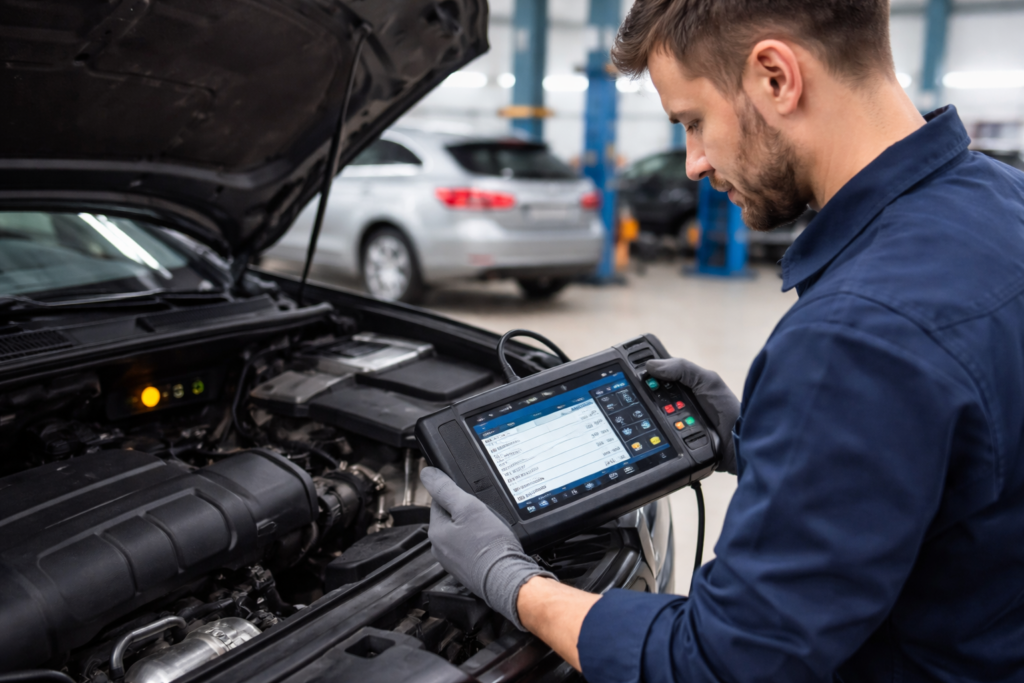
Vehicle maintenance has changed dramatically in the last few decades. Modern cars are no longer purely mechanical machines; they are computerised systems with dozens of sensors and processors monitoring performance, emissions and safety. At the heart of this technology is the onboard diagnostics system, a powerful tool that can detect and report problems before they become serious. Understanding how diagnostic checks work and why catching fault codes early matters can help you protect your investment, stay safe on the road and avoid unexpected repair bills.
What Is a Diagnostic Check?
A diagnostic check is a systematic scan of your vehicle’s systems using specialised equipment. Essentially it is like a health check for your car. The vehicle’s onboard computer, often called the Engine Control Unit or ECU, constantly monitors vital components and systems through a network of sensors. When something does not operate within normal parameters the system stores a Diagnostic Trouble Code or fault code in its memory. By connecting a diagnostic scanner to your vehicle’s OBD (On-Board Diagnostics) port, technicians can retrieve these codes and interpret them to understand what is going wrong.
Understanding Fault Codes
Fault codes are standardised alphanumeric messages that indicate the general area and type of fault detected. Each code consists of a letter followed by four numbers. The letter refers to the system affected, such as powertrain, body or chassis, while the numbers give further detail about the specific issue. Although a fault code does not always tell you exactly which part needs replacing, it gives a starting point for diagnosis.
What a Diagnostic Check Includes
Diagnostic checks involve more than just reading codes. They allow a trained technician to see the live data being reported by sensors across the vehicle, view historical data captured when a fault occurred and assess the condition of many interrelated systems. These systems include the engine, transmission, braking and exhaust, as well as electrical components that control everything from fuel injection to airbags and stability aids.
Dashboard Warning Lights and Hidden Faults
Many motorists first become aware of a fault when a warning light appears on the dashboard. The most familiar of these is the check engine light, a visual signal from the onboard computer that something requires attention. This light can signal anything from a loose fuel cap to a misfire in the engine or even issues with emission sensors and performance systems. While the presence of a warning light often means there is a stored fault code, not all codes trigger visible lights. Some codes are stored without any dashboard warning until the issue becomes more serious. Regular diagnostic checks can uncover these hidden codes.
Why Catching Fault Codes Early Matters
One of the primary benefits of early detection is the opportunity to address issues before they escalate. Cars are complex integrated machines and a minor problem can quickly lead to secondary damage if left unchecked. For example, a small misfire in an engine can overheat components, leading to more extensive damage that requires costly repairs. A diagnostic check can catch the initial fault, allowing a technician to find and fix the underlying cause rather than treating a symptom that has worsened.
Safety and Reliability
Early fault detection also contributes to safety and reliability. Fault codes relating to braking systems, airbag circuits or stability control are not issues to be ignored. Even if the car still seems to drive normally, these codes could be telling you that critical safety systems are degraded and need attention. By finding and fixing such issues early, you reduce the risk of failure when you most need these systems to perform.
Boosting Performance and Efficiency
Regular diagnostic checks can also improve efficiency and reduce operating costs. Issues such as faulty oxygen sensors or problems in the fuel system can lead to poor fuel economy, increased emissions and reduced performance. By identifying such issues early, you can correct them before they have a significant impact on how your vehicle runs, potentially saving money at the pump and reducing wear on other components.
When Should You Get a Diagnostic Check?
A common question for owners is how often a diagnostic check should be carried out. There is no strict rule, but a diagnostic scan at least once a year is a sensible baseline for most drivers. It is particularly important if a warning light appears, if you notice changes in performance or ahead of a prolonged journey. Many technicians also recommend a diagnostic check before buying a used car, as it can reveal underlying issues that may not be obvious on a test drive.
How the Process Works
The process of a diagnostic check is straightforward for technicians. A scanner is connected to the car’s diagnostic port, usually located under the dashboard, and the tool communicates with the onboard computer. Stored fault codes are retrieved along with live data showing real time sensor readings. An experienced technician will interpret this information to determine whether a repair is needed and advise on the best course of action. It is important to remember that simply clearing fault codes without addressing the actual problem will not fix the issue and may cause the warning light to return.
DIY Tools vs Professional Diagnostics
Many vehicle owners also use basic OBD-II code readers which are affordable and useful for initial checks. These devices can show stored fault codes and sometimes provide general explanations of what the codes mean. However, advanced diagnostic tools and professional expertise provide a deeper, more accurate diagnosis, especially for complex or intermittent faults that may not be obvious from codes alone.
What Does a Diagnostic Check Cost?
The cost of a professional diagnostic check in the UK typically ranges from around £40 to £100, depending on the complexity of the scan and the systems examined. This is a modest price in comparison with the potential cost of major repairs that may be avoided if faults are detected early. For many drivers it is a worthwhile investment to keep their vehicle running smoothly and safely.
Stay Ahead with Early Diagnostics
Understanding diagnostic checks and the meaning of fault codes empowers you as a vehicle owner. Instead of waiting for a problem to become evident through performance issues or a breakdown, you can take a proactive approach to maintenance. This helps preserve the health, efficiency and safety of your car over its lifetime. Regular diagnostics allow you to catch fault codes early and act on them effectively, keeping your vehicle in optimal condition and helping you avoid the stress and expense of unexpected repairs.